The First semester is gone. Time to reflect on it all….
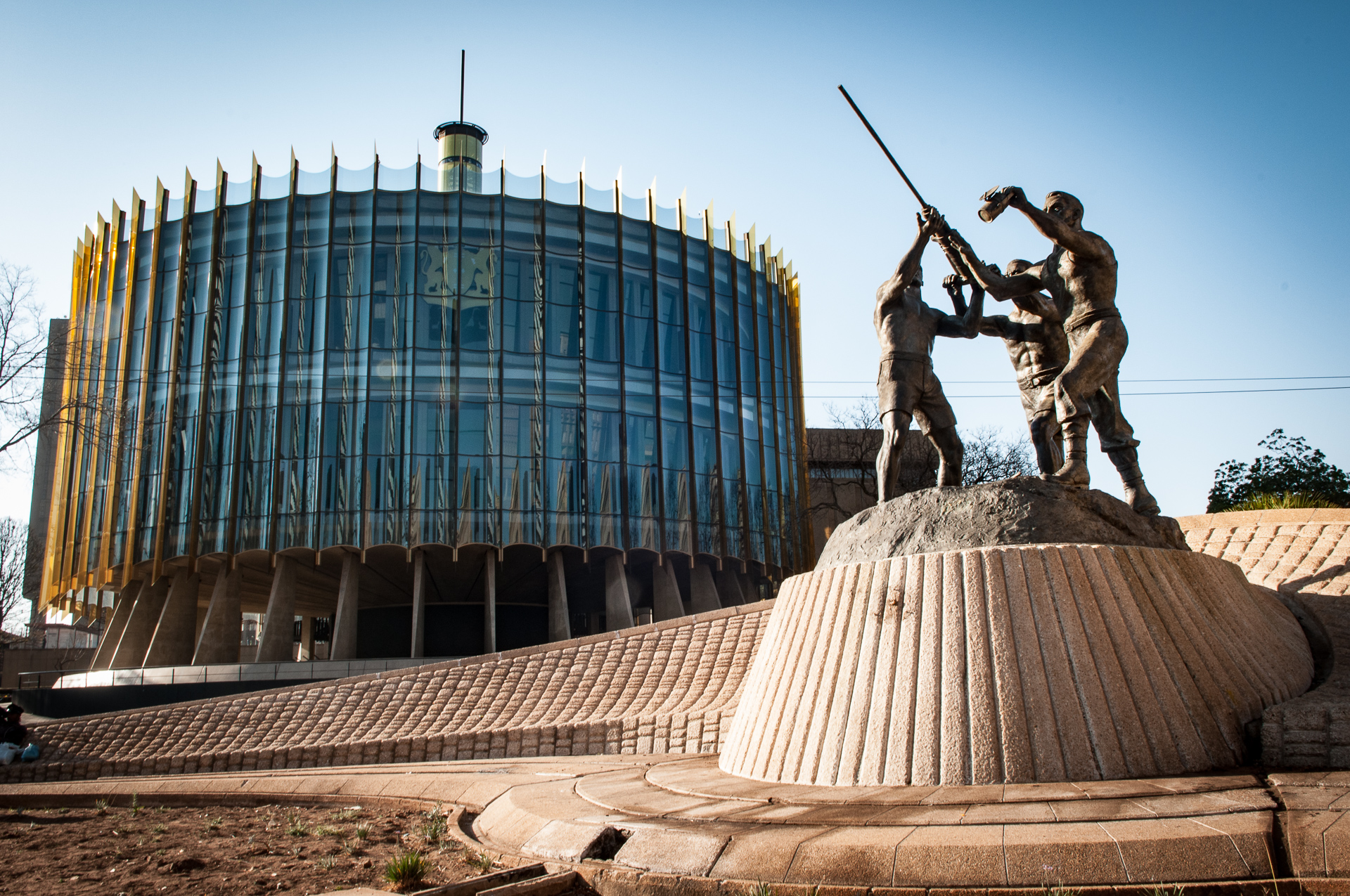
(Andre Nagel 2019) Statue honoring the Miners of both African and European decent, back dropped by the New Johannesburg Council Hall, a symbol equality and common sharing. Symbols of Synergy between Modern Mining and African Mining.
For me this semester was most definitely a decision to select my practice and positioning myself as a contemporary documentary photographer . However, it was never easy for me. In Brassaii’s words: “I’ve always hated specialisation. That’s why I constantly changed the medium I express myself…that way I can breath, I can see things anew (Gautrand, 2008 p 9).”
I realized at the outset that I needed to select a specific “practice”/ genre that I want to use to grow . I have done many personal projects ranging from landscape, abstracts, flowers, portraiture, wedding and events and other “eye candy” work. I definitely did not want to socio-political documentary. I even stated that to my on line tutor, Paul. But that intent was short lived.
When I started the program I wanted to break away from my past. I did not want to engage with a political agenda. I just wanted a “normal” project. But this changed when I was challenged by the reading work from “Practices of looking” (Sturken and Cartwright, n.d.). This monograph highlighted that my gaze as a photographer may be from a Paternalistic Western view and that I may not be able to see other original philosophies prevalent in my context as a South African. I knew I wanted to pursue the Documentary photography practice from the start, but thought I can get away with a simplistic subject. This was not to be…
My Oral presentation became a deep self analysis, and from it was borne a need to investigate the post apartheid South Africa and the collision between unpopular and sometimes condescending Colonial philosophies and Ubuntu, believed by many to be the answer to South Africa’s challenges. And I started on a journey of discovery far beyond my expectations of the course.
In an earlier blog I mentioned that I no longer wanted to define myself as white and South African, but I have discovered that it is not easy to break those bindings. I discovered how I am entwined in the knowledge of major socio-political issues still prevalent in South Africa. I found myself being alien to the challenges of my peers to the extend that I was alienating myself from them.
Reading “On Photography (Sontag, 2014)” I came to realize how unpopular the practice of documentary photography has become, reinforced by the inability to ensure the delivery of “truth” with the arrival of the digital age. (Ritchin, 2013)
That being said, I also found a diamond where Darren Newbury quote Susan Sontag at the “Photography, Politics and Ethics seminar”, held in Johannesburg in 2004, where she talked about being struck by a strong moral and ethical dimension within South African Photography and the attention given to the politics of photography (Newbury, 2009). This has made me realise that I have an obligation to attempt to uphold such a standard.
One of the most important things I did discover is in my picture taking. I needed to learn to detach myself my believe systems and opinions. I needed to become dispassionate with my subject matter, following in the path of my favorite documentary photographer, David GoldBlatt.
I started reviewing the work by my favorite photographic mentors and among of all the gold nuggets I found a mantra to work towards during the coming semesters: Don’t be a Thief; don’t take people by force. (Gautrand 2008 p9)
I will also pursue the following as a creative principle: “There are two gifts which every man of images needs to be a true creator: a certain sensitivity to life, to living things, and at the same time, the art which will enable him to capture that life in a certain specific way. I’m not talking about pure aesthetics: a confused photo isn’t capable to penetrate the the viewers memory. I’ve always felt that the formal structure of a photo, its composition, was just as important as the subject itself… you have to eliminate every superfluous element, you have to guide your own gaze with a strong will. you have to take the viewers gaze, and lead it to what is interesting“- Brassai (Gautrand 2008, P 12) .
References
Gautrand, J. (2008). Brassaï, Paris, 1899-1984. Köln: Taschen.
Newbury, D. (2009). Defiant Images Photography and Apartheid South Africa. 2nd ed. Pretoria: Unisa Press.
Ritchin, F. (2013). Bending the frame. New York: Aperture Foundation, Inc.
Sontag, S. (2014). On photography. New York, NY: Picador [u.a.].
Reflection on my readings and the impact on my Project.
“The Photographers Gaze” By Andre Nagel.
We are almost halfway in the semester and I can honestly say that I am only getting a handle of the course now. This weeks content had the greatest impact in my mind. It takes time for one to assimilate, internalize and synthesize information and in this week it all sort of came together. Such a shift changes you as an individual.
My mind shift occurred while reading Marita Sturken and Lisa Cartwright’s “Practices of looking: An Introduction to visual culture (spectatorship and power)” and specifically the section “The Subject of Modernity” (Sturken,M and Cartwright, L : p94).
It changed the way I will approach my project and me trying to find myself in a post-corporate role. I agree with the authors that to understand our role as image creators we need to understand ourselves, the subjects gazing at the image after I have taken it , the people gazing at me in the image and the context of the “field” as defined in text. I believe that doing so will improve my interpretation and understanding of my own images and and has the potential to take my documentary photography “From success to significance”.
The article impressed me as it uses philosophy and modernity as the point of departure in this introduction to visual studies.
However, what surprised me was the I had an epiphany in the realization that much of what is happening in South Africa ( a Ex-European colony), in the newly “liberated” or freed society may be explained in the following profound portion from the text. “These colonial strategies of modernization were justified by the Eurocentric belief that European practices and beliefs were objectively better (more advanced, more sanitary, more ethical , more modern) than the cultural practices and ways of knowing and living in the world that had been in place prior to colonization.” (Sturken, M and Cartwright, L : p95, p96). I believe that it is that lead to supremacist views, racism in the colonies and finally “segregation” and “Apartheid”.
To be effective I need to see how much of this is these views are in-bedded in my thoughts. I know that in certain ways I still hold some of these believes.And I am still a male….
About a year ago my best friend, who happen to be a coloured, accused me of wanting to enforce my western ethics onto Africans. My simple answer to him was, ethics are ethics… Its important to know that my dad was a liberal that grew up in a integrated society in Observarory Cape Town and we were taught to respect all people irrespective of their race, colour or creed.
A second thing I came to realise when photographing Black brides I found that I could not view them as I do white women even if they followed western traditions. Facing this realization made me change the way I look (Gaze) at these pretty woman and my photographs normalized as they started to gaze back at me differently. This activity within myself improved my photographs and I can now relate fully with the individuals. But I know I am still a work in progress.
The impact of Modernity in South Africa is also a work in progress.
Modernist thinking led to the Dutch to travel around the Cape of Good Hope finding a route to India. The early Dutch and French settlers came from a stock that fought for their convictions and had to flee to the Cape province to avoid persecution. As in the case of the early Americans they fled the imperial aspirations of European monarchy and in the case of the British settlers, poverty and injustice in England. There aspirations driven by modernist ideals and led them to create two independent republics separate from their mother countries.
Jumping ahead to the 20th Centuray, Our founders and political leaders were well educated in western philosophy, rational thinking, science and and modernist view. Dr. D.F Malan the early protagonist for “separate development in the 40’s and 50’s, was trained through the Anglo/European Tersiary education systems at Victoria College (now klnown as Stellenbosch, where he earned a Bsc in Science and mathematics, did an MA in philosophy before getting his Bth and Doctorate in Theology (Koorts,L:P23).
Malan went to the same school and College as Jannie Smuts in his youth. (Koorts,L:P29). While Malan who did some of his education in the Netherlands during the Boer war is today seen as a racist, Jan Smuts who was 4 years older and Studied Law at Cambridge, and who fought against the British during the Boer war and with the Allied armies during world war 1 and II, turned out to be a romanticist, botanist, war hero that became a peacemaker and world leader. This is a story very similar to that of Nelson Mandela whose statue today stand next to that of Jan Smuts in Trafalgar square.
This is part of a discourse happening in my mind and those gazing with me at the new South Africa. This expands my image making process. There is a “now” to be recorded. Midrand, a vibrant and a developing city, nested between the Johannesburg , the center of commerce, mining and industry, and the Tswane (formally known as Pretoria), the center of our democracy as political power, is my home. It hosts the PAN African Parliament and most of the post industrial, technology companies. I am living in a cauldron of modernity that is affecting and shaping our society, religion, culture and economic lives. An ideal opportunity for me to document!
South African Artists tend to interpret what we gaze at South Africa through “Apartheid” and “Colonization” and “White/Non white glasses” but maybe we should expand this gaze and “Modernize” it when we interpret what is happening to us in global terms.
Putting it in the words of a Non-white South African:
“As we stand atop the political ruins of the Afrikaner nationalist project and, staring at the horizon, see in rough outline what looks like the makings of an African nationalist wreck, we might think there is nothing worth excavating from these ruins. But, as Lindie Koorts shows in this fascinating biography of D.F. Malan, there is much that South Africans, still have to learn about their collective past. She has produced a book that shows how one can go about writing a history that is understanding but not apologetic, sympathetic but not justificatory. Malan was not an evil man. He certainly meant to do right by poor whites and to achieve Afrikaner unity. But, and this is perhaps the most important lesson to take from this captivating book, Malan could not see beyond his narrow community interests. That, ultimately, was the greatest irony of Malan’s life.’ – Jacob Dlamini, author of Native Nostalgia and Categories of Persons (edited with Megan Jones) (Koorts, L:Afterword)
You may well ask why I reflect on this… It’s the incoherent “separate” and asynchronous way that the positive and negative sides of modernity has hit the different groups of people in South Africa and the collision of thoughts and discourses, that is reflected in my field of gaze and interest me. The introduction opened my eyes to see this in practical terms. And I now have the urge to develop this understanding my Gaze and the Field in my practice as a documentary photographer.
This discourse will form the basis of my oral presentation and as Paul suggested I need to verbalize it concisely and slice the effort into workable realistic chunks of work. Truly a challenge as my mind races towards a accomplishing a huge body of work that will probably take the rest of my lifetime to achieve.
Reflections on Ethical Discussions:
The Fisher Cohort started our discussion around the abuse and misinterpretation of a photograph by UKIP for political purposes. It was as far as I am concerned the best discussion so far.
I could see how the debate raged internally within each one of the participants, specifically Bekkie. I was not new to the debate and added my 10 cents worth which was well received.
My mind started to wander to ethics at a different level. I came to realize and acknowledge my personal responsibility as a photographer for the pictures I take and the story I tell. But this responsibility include the assignments we undertake to do and to whom and for what purpose we deliver their images to. We no longer can use the Nuremberg excuse. Issues that was discussed was copyright and publishing rights, codes of conduct and ethical standards. I also added that as photographers we need to take responsibility for our own business and make sure that the Law reflect our ethics by lobbying an fighting for justice and appropriate use of our works. This include social media and news and media agencies that can only be governed by Law.
The aforementioned discussion and the Alan Kurdi video brings to bear a need for a deeper analysis regarding ethics.
It chalenged me to reflect on other aspects of ethics such as our purpose to take a photograph, i.e the reason for our gaze as a photographer. Was the journalist taking the picture to make money? Or is the purpose fame and honour such as a pulitzer prize, Or commercial, merely wishing to produce shock for some agency to get legal tender to live. What responsibility and ethics was applied by not publishing it in certain countries and alternatively, which of the photographs was actually published? And lastly, the impact it has on us sitting in an environment of calm and peace viewing the horror of what is happening in the world desensitizing us to the truth out there.
For me the shock was the quality of the child’s clothes. He does not represent poor down trodden unwanted members of our society, but present modern, well loved and a well cared child, rejected by our society. I must declare that I too have become desensitized to the horror of famine, war and injustice in Africa. How did we react to the horor of the Ethopian Kids migrating in Africa.
The death of Alan Kurdi had a desired outcome and opened the door hearts of many countries to the Syrian refugees and their plight. Does the end justify the means?
It then brings into play the ethics of censorship. With reference to my in discussion on censorship in the Article in week 4 about of citizen journalism in the Boston marathon attack and the linked impact assessment where the American authorities wanted to switch of the cell service to reduce the impact of the story to the general public.I was also prevented from watching McCullen in South Africa. Was it a regional block or a censored video as it include black on black violence.
Just a general note. The group is mostly in agreement and unfortunately we are not really getting to debate differences of opinion. I see Paul raised some questions that could produce this outcome but unfortunately my time was up. In future I will see that if the opportunity arises that I will add an alternative perspective to the discussion and see if it produces a deeper outcome. In my opinion the group and myself has not broken the politeness barrier yet.
Reference: STRURKEN, Marita and CARTWRIGHT, Lisa. ca. 2001. “Practices of looking: An Introduction to Visual Culture.”
KOORTS, Lindie. ca. 2014. “DF Malan and the Rise of Afrikaner Nationalism”
What the wider world makes of us as a photographic Practitioner…
Marvin Heiferman made the claim that photography is changing itself ( HEIFERMAN:2012). While he meant the way we view photographs, I want to add that it also changes the role of photographers.
“If photographers in the past were respected as skilled professionals and idealized as romantic truth-seekers, today’s model is more democratic. WE ARE ALL PHOTOGRAPHERS NOW! proclaimed the boldly lettered title of a 2007 exhibition of visitor-contributed digital content at the Musee de l’Elysee in Lausanne, Switzerland.” (HEIFERMAN:2012,P14).
David DuChemin is less eloquent and verbalises what we sometimes feel when he says: “Every one that have a @#$ Camera think they are Photographers”
However he continues:”When the words, “everyone is a photographer!” are muttered we show our true cards. We reveal first that we believe the very word “photographer” has intrinsic merit. We believe, mistakenly, that it implies something precious, not unlike our use of the word “artist.” For the record, I think our use of the word “artist” has become too precious as well. We say it with misplaced reverence. To be an artist simply means we make art. Some of it will be good, some will be garbage, and many will be the arguments about which is which. Oddly, the photographers who would never deign to call themselves “artists” for fear of being called out as a snob, will happily exclude others from their ranks as “a photographer.” It’s time to call this what it is: elitism, snobbery, and small-heartedness.”
More worryingly, when we bemoan the new reality, that so many people are in fact becoming photographers, we show an unwillingness to share the thing that has given us such pleasure” (DuChemin:2018).
David warns not to disparage other photographers even the beginners. What we may need to do is to firstly acknowledge that all people that use a camera are photographers as they may be future practitioners and that we learn to edify our fellow practitioners and photography masters. This will reduce conflict and return the practice to some credibility and acceptance.
I still get asked whether I am a professional photographer and it still means something today for serious clients. As a long time amateur photographer that first turned semi-professional and who is now only embarking on a full-time career have the greatest respect for both amateur and professional practitioners. As a Photography teacher I have also come to appreciate the first attempts by new photography student s and the personal growth, fascination and wonder experienced by them, which takes me back to by early days. Whats more, I have seen that the digital photography has allowed some of them to leap frog their practice. One of my students bought her camera two years ago during my course and three years later she was invited to exhibit one of her Photographs at an Expo in Venice Italy. She still sees me as her mentor and the one that has opened her eyes to this world.
We can debate terms to define photography practitioners as Snap shooters, Professional, Amateurs and Fine Art photographers. But I doubt if the term snap-shooter still applies to the modern mobile device photographer “hibstamatic”. We can also define photographers according to their genre e.g. War Photographers, Fashion Photographers, Fine Art Photographers, Landscape photographers, Wildlife photographers, Travel Photographers, Journalists, Wedding Photographers and many more. But our opportunities and the work projects we do may be the defining us not what we define ourselves to be.
Don McCullen in the documentary of his life makes the point that we get defined by the the photographs we deliver. He became known a a War Photographer a title he in later life came to hate and has made attempts to change that.
Initially snap-shooters were limited to taking photographs and sharing it with family and friends through a private album. The advent of the internet, the smart phone or what is now called a mobile device and social media has opened this sharing to everyone. Photography for them has become a way for them to communicate. They have effectively become adept in using the visual image to communicate and in journalling their own lives. While it was still possible to separate the work of a professional or serious amateur photographer based on the quality of their work and practice the gap is closing. The “Citizen Journalist” has been created that can and will through practice be able to get to places and report on stories close to them in near real time in a much more efficient way than a hired pro could ever do. But this is not only for personal interest areas.
But events and opportunities may redefine us….
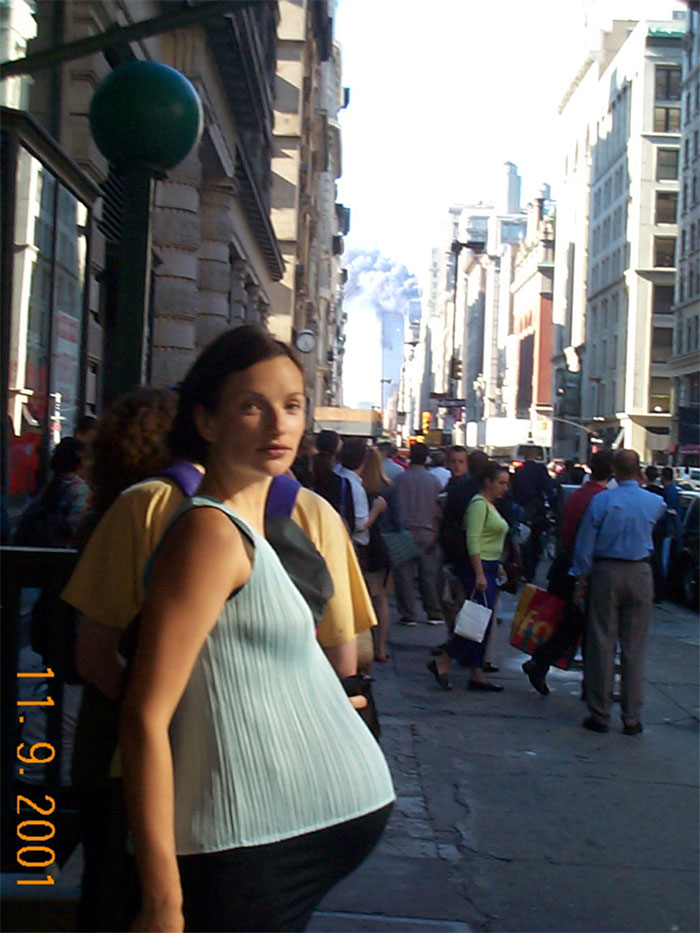
New York 911 September 2011 Not Yet Realizing A Terrorist Attack Was In Progress, Architect And Amateur Pilot Isabel Daser, Eight Months Pregnant, Asked A Co-Worker To Take Her Portrait As A Record Of The Day (Greta,J: 2015) .
The Rapid development of the Citizen Journalist development can be tracked. While the 911 was covered by photo journalists and activist like Bill Briggart ( Briggart:2017 ), who gave his life at the World trade center, Documentary photographers like Magnum photographer Steve Webb, Street photographer, Joel Meyerowitz, (Harris:2011) a world renowned War Photographer James Nachtwey (Nachtwey:2017) and amateur photographers such as a John Botte a NYC Detective and some tourists present on that day. Photos were with an unprecedented variety of camera’s such as Instamatics, 35 mm film SLR’s and rangefinder cameras , Medium format cameras and their is even a photograph taken with a view camera. Todd Maisel a Photo journalist used the first professional grade DSLR an , a Nikon D1 and a photograph taken using a Sony Mavica. All of them captured the mood of the day and the events in their different perspectives. What is notable is that the cellphone camera has not been introduced yet
The cellphone camera launch in Japan and 911 happend in the same month. the Cellphone camera was launched in Britian the folowing year and it was launched in America in November 2002 (Hill:2013).
According to The Gaurdian commenting on the London Bombings in July 2015 ” The mobile phone photographers, the text messages and the bloggers – a new advance guard of amateur reporters had the London bomb story in the can before the news crews got anywhere near the scene.” and ” Seasoned news executives talk of a “tipping point”, a democratisation of the news process, the true birth of the “citizen reporter”. The public assuming control of the newsgathering process to a hitherto unimagined degree ” (Gaurdian:2005) . The world now needed to assess the impact of this new tendency.
A study done post the Boston Marathon Bombings in 2013 discusses the lessons regarding information provided via the Cellphone users. While regarded negatively, the footage from cellphones was used to identify the perpetrators. This article however raises major issues regarding “Citizen Journalism”.
The american government is considering blocking this unstoppable natural progression. While clearly accepted by news gathering executives this new tendency threatens the careers of established professionals.
Even documenting peoples lives is done effectively by “Hipstagramers”. I have seen work done by some of these that compete well with those making a living of it. Don Mcullen states in one of his videos that he does not fear the social media a the difference would become apparent when a photograph is enlarged. The quality of smartphone cameras has already passed that of film and is no longer true. ….. Day in “the life of Grunts” proved that with sufficient skill the IPhone can be used for news gathering and even win journalistic prizes.
As a wedding photographer I feel constantly under pressure to produce better work and deliver photos as soon as possible as I may be embarrassed by “Aunt Joey” taking better photographs and provide it a half an hour later via social media. But even saying that, my greatest threat is from Professionals that used to work in advertising, fashion and journalism who are losing out to cheap stock footage and CGI that change their career to wedding photography to survive.
This change in demand and skill requirement is not limited to the Photography practitioner. I was trained as Electronic engineer and had to reinvent myself to become a IT professional. with the advent of cheap hosting services in the cloud it is no longer possible to solicit a high salary as an IT architect. It is said that all practitioners may only have a carrier of 10 Years after which they will need to rediscover and retrain themselves.
If photography is the new language, then it holds true that the ideal is that everyone learns it and use it to communicate. And as in the case of the written language there will always be those that excel in it and a demand for them to provide eclectic or other supporting services, such as master photographers that know their craft at its deepest level, post production specialists, colour experts, graphic designers, editors etc. In short mediocrity will not survive. Not unlike the other industries, if you want to be a professional you need to provide real value. There is also a need to train photographic ethics as the above discussion indicate.
In the Art community the artist needs to find a way that express contemporary issues or be so eclectic that someone consider their work collectible.
Its only the amateur that still have the freedom to pursue freely the whole gamut of opportunities available to us all and enjoy a photograph, even if a million similar images has been taken.
Reference: HEIFERMAN, Marvin. ca. 2012. Photography Changes Everything. Aperture.
BRIGGART, Bill ca. 2007. “21 Rare Photos Of 9/11 Attacks You Probably Haven’t Seen Before” Bill Biggart Photographer (1947-2001) [Online] Available at: http://www.billbiggart.com/911.html [accessed 20 June 2019].
While concluding the “Seeing through photography” class presented by MOMA we had to select our favorite week during the course and say why using their material or my own. I decided to use a portion of David Goldblatts work in The Afrikaner. I thought it wise to share with you.
David Goldblatt’s background, as a descendant of Lithuanian Jews who had to flee their country due to racist hate and marginalization, made him a perfect observer of the South Africa of his time. He always saw all people as they are and never wanted to choose sides in the political, economic and class agendas. He said he wasn’t a “Joiner”. He died in June this year, keeping true to his dream for his beloved South Africa.
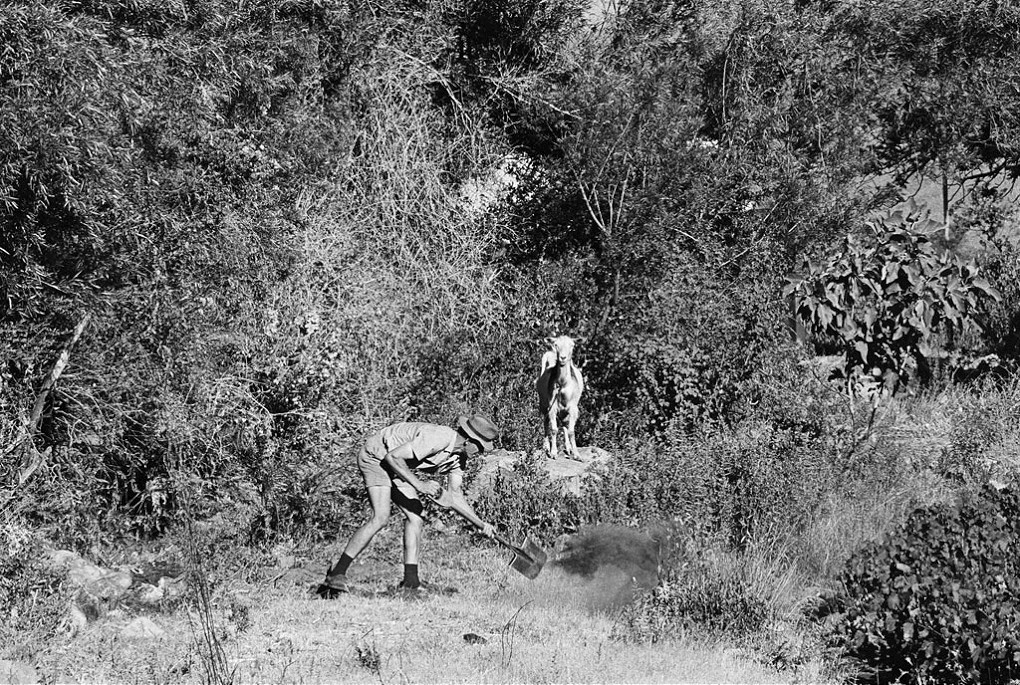
I needed to set the scene, as the following photographs are from David Goldblatt’s series which he published called “Some Afrikaners photographed”. One may skew his intention by applying a political context on what you will see. He did similar wonderful published works on other communities within South Africa.
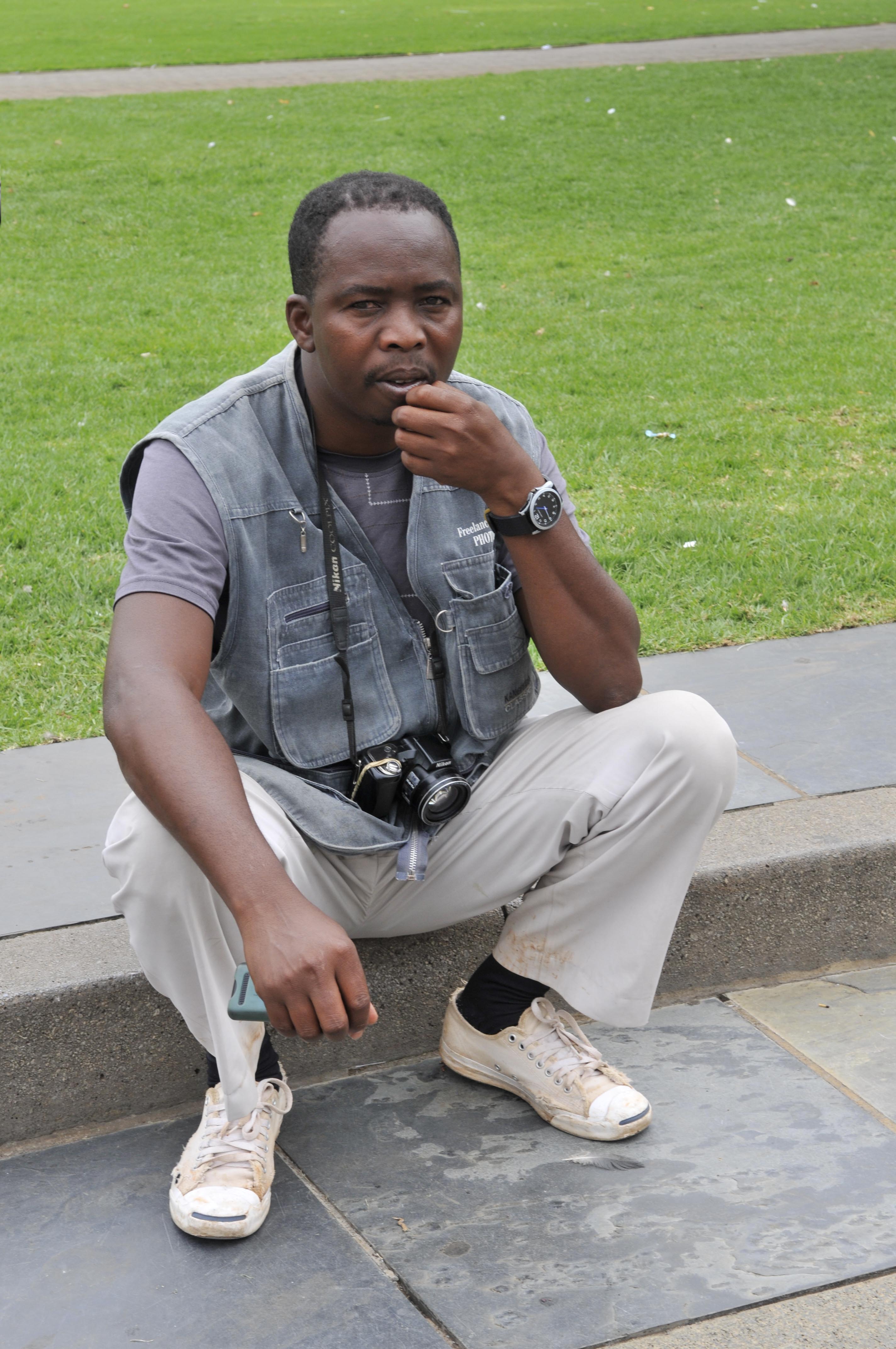
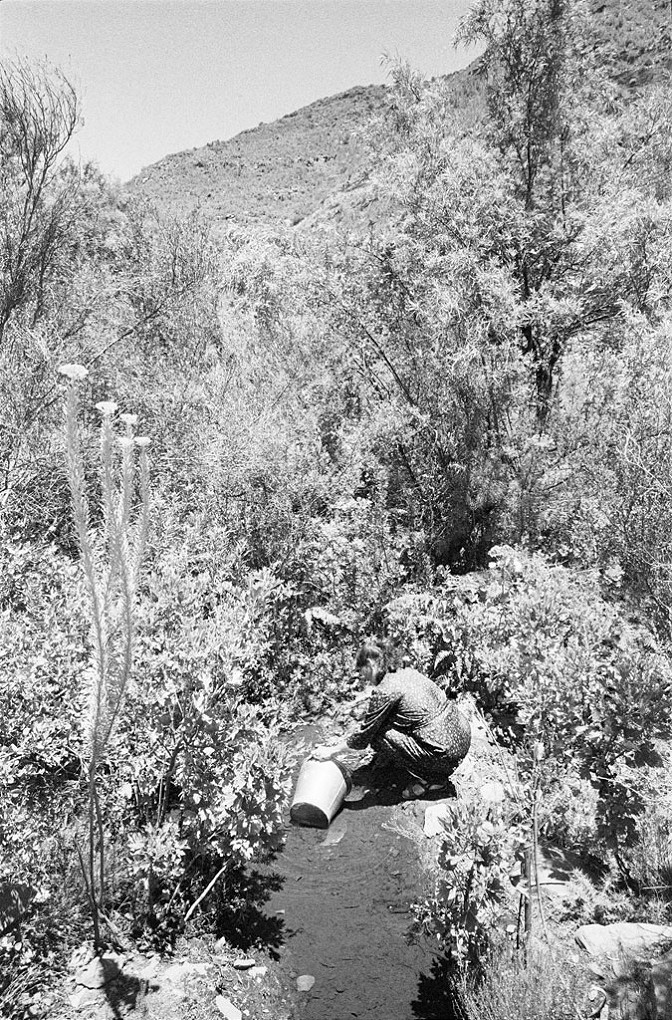
While passing through, we met one of the last original “Kloofers” and signed his guest book.
Half of the valley has no water and is split by a river that passes through the center of the valley. The eastern part of the valley has little water and is probably why outsiders called it “The Hell”. However, as you cross the river towards the west, the vegetation changes due to this freshwater stream running from west to east.
This part of the valley, Which I named “paradise”, is where most of the residents lived.. Walking through this botanical splendor has become the most beautiful and memorable experience I had in my life.
Note that the dress Katrina wears is not reminiscent of the 60s, More from the pre-first world war times. Most Afrikaner woman never wore pants in those years and they grew their hair long. These were simple people. They struggled on their own. No indoor plumbing. For me, David captured the essence of this.
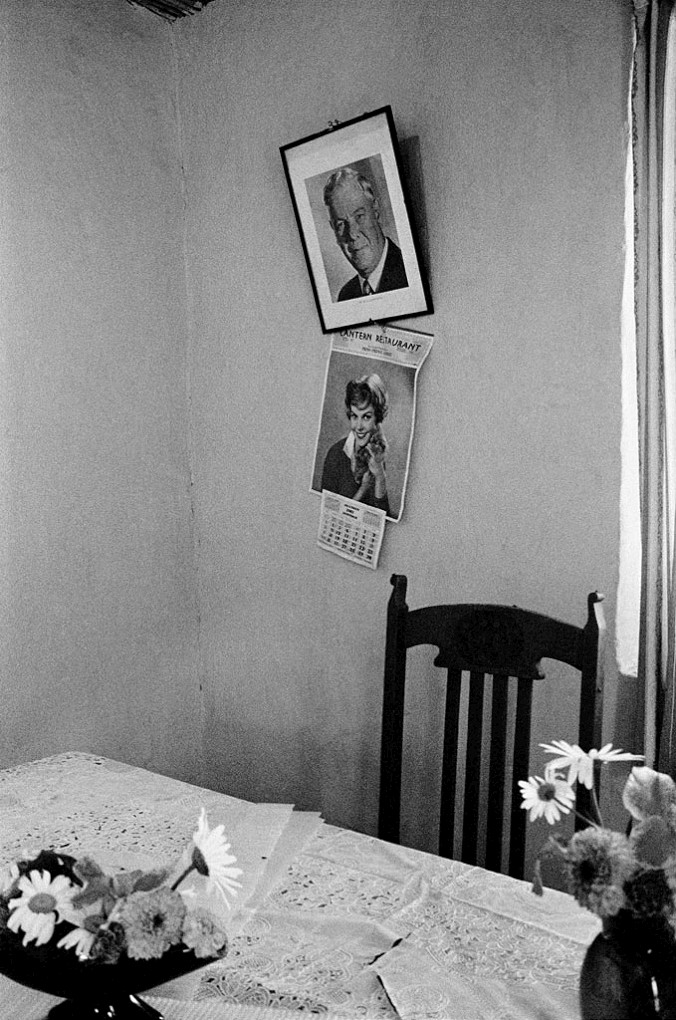
In Afrikaner culture the dining room and kitchen is the center of family and religious life. Although isolated from the outside world they have a Photograph of Dr. Hendrik Verwoerd on their wall, one of the founders of the Republic of South Africa. He was also the first Prime minister, who is today infamously known as the father of “Grand Apartheid: Dr. Verwoerd was well loved by most Afrikaners and, surprising to some, a large group of Africans. Dr. Hendrik Verwoerd was assassinated on the 6th September 1966 for non-political reasons, more than a year before this photograph was taken by David. A loss to the Afrikaner, much in the same way the Americans losing President Kennedy or even Abraham Lincoln.
The tidiness and flowers within this simplicity is endearing and take me back to my grandparents. The Calendar is of a restaurant has a picture of a the quintessential 60’s woman and contrast with the previous picture and may be indicative of the aspirations of the wife, Katrina.
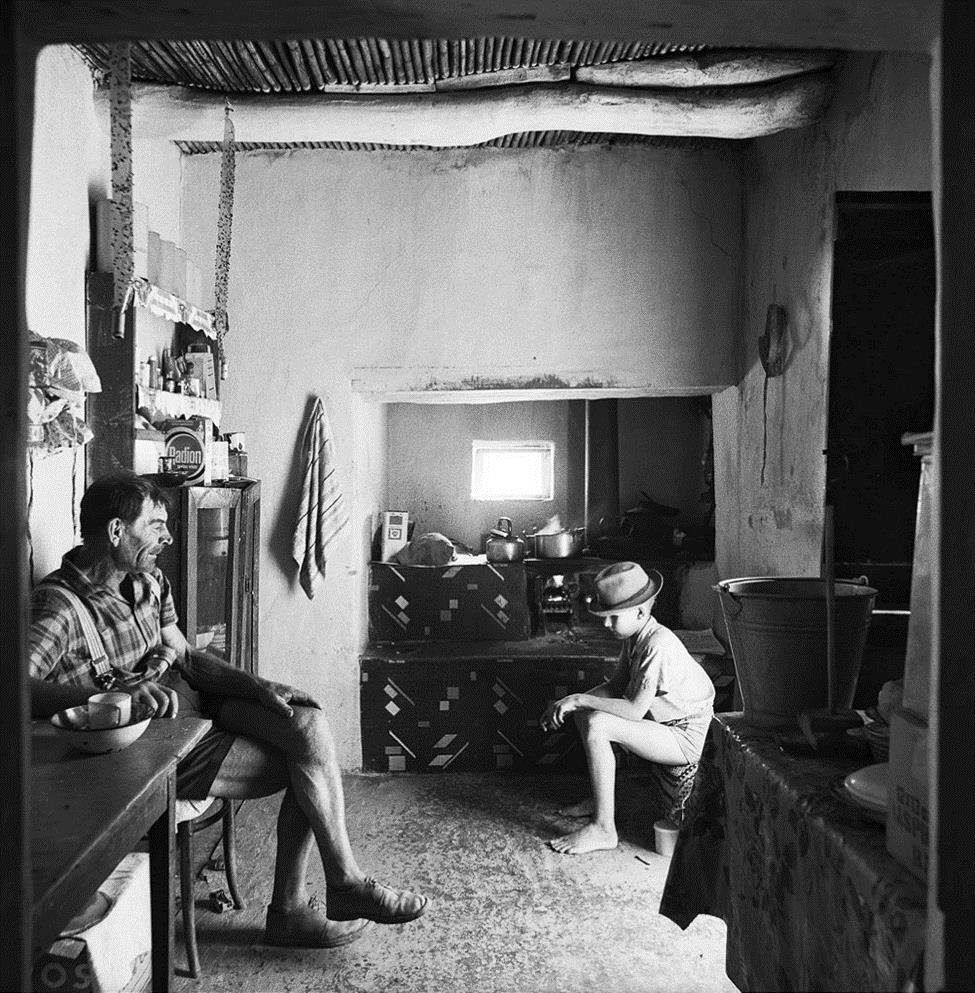
I love the way David could get the people so at ease. He was an outsider. However, It may be indicative of the hospitality for which the Afrikaners was well known for at that time.
I grew up bare foot too. Shoes, if you had any, was only worn on special occasions.
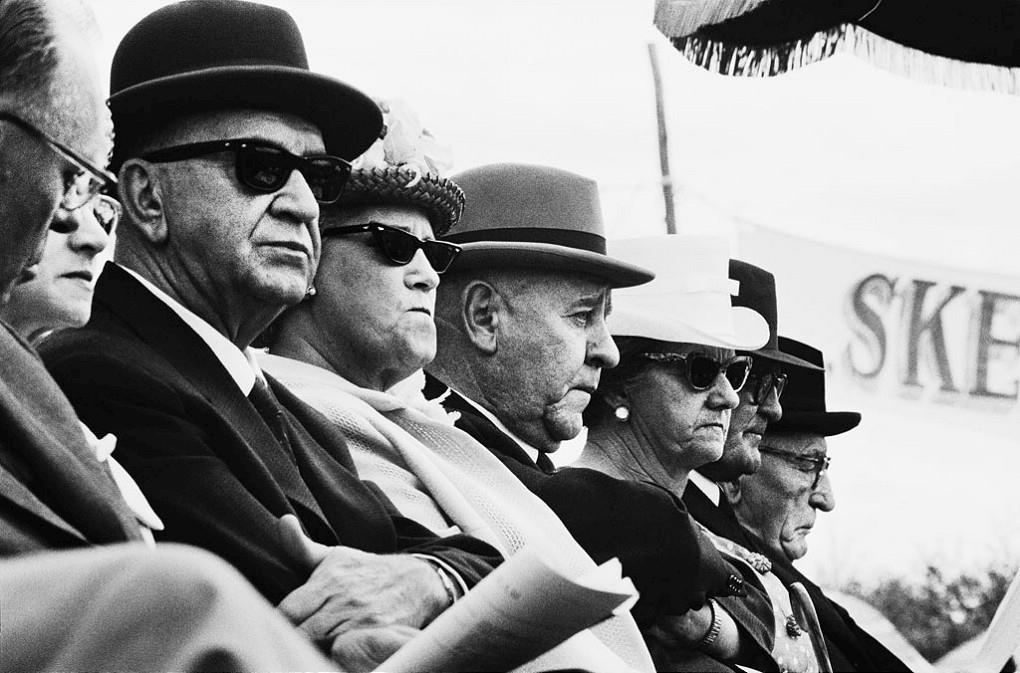
Even if David did not want to take sides in the political debate, the acceptance of his work was received differently by the various communities.
My essay clearly indicates how my context influenced my interpretation of the photographs.
Those promoting Afrikaner idealism, trying to escape their past, saw this as an attack on the dignity of the Afrikaner. Those Afrikaners, that came from rural backgrounds relate to these photographs. This essay does not take into consideration how English South Africans and Africans view these photographs. There is a universality here. We all have ancestors that share a similar struggle to tame a rugged land. Simple lives in simple houses. In this way, the issues of the photographer’s view, the ability of a photograph to tell the whole story, is tested in the same way as Robert Frank’s “The Americans”.
If the photographs are viewed out of context or from a different point of view, the above photos may be interpreted completely differently.
David had to publish his own books and add his own comments to ensure that the work had integrity, with limited influence of publishers. As a South African and Afrikaner, I appreciate his full body of work and wish that I can follow in his footsteps to photograph the unfolding future of the human side of all the Peoples of South Africa.
 André Nagel's Critical Research Journal