My experiences and insights and solutions for operating effectively in this challenging profession.
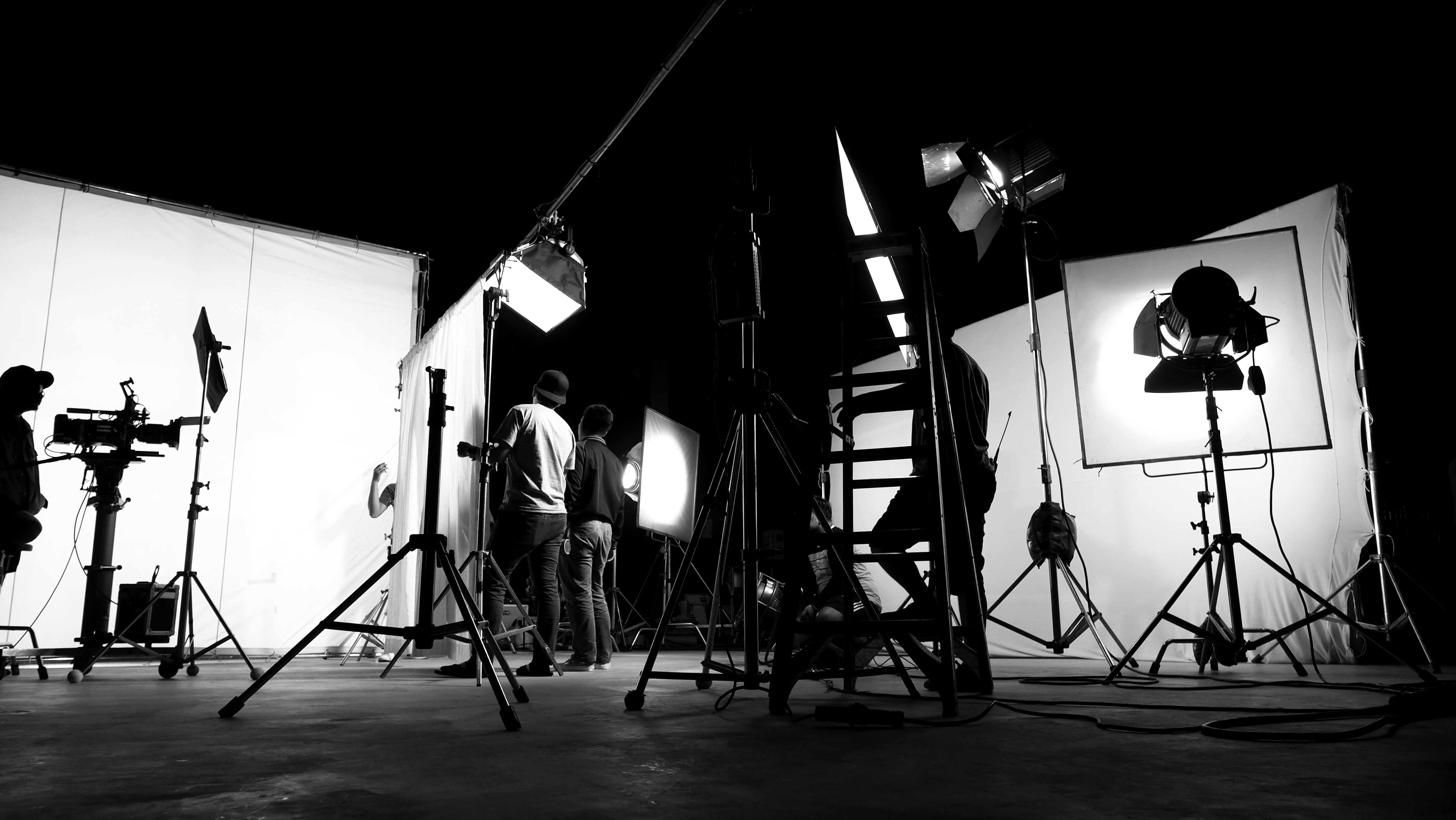
“Professional Eclectic Practice – Adobe stock”
How we address the issues above will determine the development of our own practices. It is continuous work. Photographer ….. suggest that we need to be like a shark and always move forward or die from from suffocation.
My experience in the highly competitive IT environment and process modeling has provided me with a model that I can share. Any process is initiated by an activity, be it a annual strategy session or a declining income stream. these triggers to the process requires of continuous monitoring of your situation. The change process is the evaluation of the circumstances and identifying those things you need to stop doing , those things you need to keep doing and identifying the changes you need implement. Changes are achieved by challenging yourself, research, education and re-education, finding the resources required for the change (people, money and tools/technology) and finally empowering yourself to accomplishing the change. Don’t blame your circumstances or be incapacitated by the “realities”.
I believe in my an inherent power to achieve my goals. Empowerment only means that use and release that power once I am enabled by information and clear vision.
I have split my photographic practice in the three distinct niches that I run independently from each other. My Wedding and portraiture photography business, My photographic education, my Art photography Development. While these niches operate independently, they do add value to each other.
In all of these niches. I constantly effectiveness and efficiency of:
my marketing ( the worst part of my armour),
the effectiveness of my business processes, and the resources for it
and the effectiveness of my practice as a photographer.
These compete for my time, but I find that the one practice encourages and inform the other.
In terms of motivation I use both a Industry mentor and business coach to assist my Wedding and portraiture photography business. (www.ludre.co.za)
For education take on-line courses on Creative live and Udemy, attend seminars and short courses provided by the photographic vendors, and I make it a target to attend a workshop at least once a year, and do a lot of on-line reading. The wedding business is becoming my primary source of income that needs to provide for my other two en devours. There is definitely activities and opportunities being provided by practitioners to improve the businesses and a great willingness to share experience and knowledge to improve these practices. Yervant, Marcus Bell, Rocco Ancora and Jerry Gionness are Australian based master wedding photographers that not only train wedding photographers but have been able to re-educate their customers to value the printed form and eclectic photography. Their initiative has now started to take hold in the United states (Joe Buisink ) and South Africa. (Brett Florrens- My industry mentor). These Master photographers is providing an un-measurable service to the Wedding and portrait practitioner. They all encourage closer collaboration between photography practitioners. I presume that similar initiatives are a foot in other photographic genres.
My art photography and education (andrenagel.photography and ANCRJ.Blog) was initiated by Britian’s Tom Ang who encouraged me to look more deeply at pictures, study Photography history and contemporary masters. This en-devours are the prime drivers why I have started to study at Falmouth. This initiatives was generated by my need to provide an proper education to my students and was further reinforced by non- accredited courses by MOMA and the university of Michigan on on Coursera. Bret Florrens. I truly appreciate the initiative by Falmouth to have a Photography specific education program that can and will address the need for developing the practice of photography at Tertiary level. Here I want to learn how to engage with the education and art communities, provide progress to become a master photographer and educator.
” I don’t have competition, I am unique. I just need to find my customer” Bret Florence – Five day wedding workshop 2018
What you are up against in developing a fulfilling career?
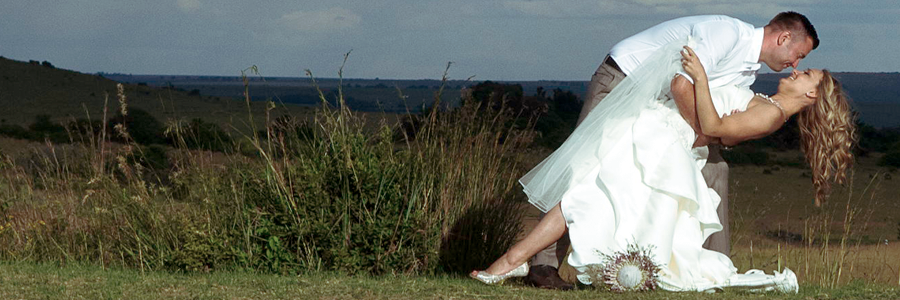
Wedding Photograph – Andre Nagel
As a aspiring full time photographic practitioner I constantly need to understand my relevance in the world I live in, find ways to provide value to the community, find a way to sell a unique offering and provide add-on services that will differentiate me from the competition. The following are the current challenges to my photographic practice.
Perception The low cost of distributing a digital image and the high level of automation and marketing of camera equipment based on this of the has changed the perception professional photographer.
Economy The economic down turn has had it impact on what people can afford to pay for photographic work and they resort to taking their own photographs. A number of amateur photographers that lose their jobs resort to Photography to find a stop gap and are embarking in short term careers. Government and museum grants for the arts are also severely curtailed as money is channeled to more important agendas.
Lack of business skills. Even a Artist needs to build a business system to make their practice sustainable. Most practitioners believe that their skill will sustain them. I was working as a part-time wedding photographer for many years before embarking on a full time career. Your ordinary work life and amateur approach does not teach you how to market yourself, build business relationships and partnership, to business planning and just effectively manage their business. This results in unsustainable en-devours.
High pressure sales techniques Some photographic practitioners are bringing the industry in disrepute through hard sales and “free service” advertising in the hope to get sales making the photography practice a commodity
Stock photo libraries are overstocked. Supply and demand drives the economy. An oversupply of photographic content by stock libraries has reduced the price of photographs
The abundance,free supply and illicit copying of low resolution images. The internet has always been a source of “free” low res images and this floods the market
The over saturation and noise created by the number of images. Social media taught viewers to scan photographs. My experience is that the time a person spends on an image is approximately 2 seconds.
What the wider world makes of us as a photographic Practitioner…
Marvin Heiferman made the claim that photography is changing itself ( HEIFERMAN:2012). While he meant the way we view photographs, I want to add that it also changes the role of photographers.
“If photographers in the past were respected as skilled professionals and idealized as romantic truth-seekers, today’s model is more democratic. WE ARE ALL PHOTOGRAPHERS NOW! proclaimed the boldly lettered title of a 2007 exhibition of visitor-contributed digital content at the Musee de l’Elysee in Lausanne, Switzerland.” (HEIFERMAN:2012,P14).
David DuChemin is less eloquent and verbalises what we sometimes feel when he says: “Every one that have a @#$ Camera think they are Photographers”
However he continues:”When the words, “everyone is a photographer!” are muttered we show our true cards. We reveal first that we believe the very word “photographer” has intrinsic merit. We believe, mistakenly, that it implies something precious, not unlike our use of the word “artist.” For the record, I think our use of the word “artist” has become too precious as well. We say it with misplaced reverence. To be an artist simply means we make art. Some of it will be good, some will be garbage, and many will be the arguments about which is which. Oddly, the photographers who would never deign to call themselves “artists” for fear of being called out as a snob, will happily exclude others from their ranks as “a photographer.” It’s time to call this what it is: elitism, snobbery, and small-heartedness.”
More worryingly, when we bemoan the new reality, that so many people are in fact becoming photographers, we show an unwillingness to share the thing that has given us such pleasure” (DuChemin:2018).
David warns not to disparage other photographers even the beginners. What we may need to do is to firstly acknowledge that all people that use a camera are photographers as they may be future practitioners and that we learn to edify our fellow practitioners and photography masters. This will reduce conflict and return the practice to some credibility and acceptance.
I still get asked whether I am a professional photographer and it still means something today for serious clients. As a long time amateur photographer that first turned semi-professional and who is now only embarking on a full-time career have the greatest respect for both amateur and professional practitioners. As a Photography teacher I have also come to appreciate the first attempts by new photography student s and the personal growth, fascination and wonder experienced by them, which takes me back to by early days. Whats more, I have seen that the digital photography has allowed some of them to leap frog their practice. One of my students bought her camera two years ago during my course and three years later she was invited to exhibit one of her Photographs at an Expo in Venice Italy. She still sees me as her mentor and the one that has opened her eyes to this world.
We can debate terms to define photography practitioners as Snap shooters, Professional, Amateurs and Fine Art photographers. But I doubt if the term snap-shooter still applies to the modern mobile device photographer “hibstamatic”. We can also define photographers according to their genre e.g. War Photographers, Fashion Photographers, Fine Art Photographers, Landscape photographers, Wildlife photographers, Travel Photographers, Journalists, Wedding Photographers and many more. But our opportunities and the work projects we do may be the defining us not what we define ourselves to be.
Don McCullen in the documentary of his life makes the point that we get defined by the the photographs we deliver. He became known a a War Photographer a title he in later life came to hate and has made attempts to change that.
Initially snap-shooters were limited to taking photographs and sharing it with family and friends through a private album. The advent of the internet, the smart phone or what is now called a mobile device and social media has opened this sharing to everyone. Photography for them has become a way for them to communicate. They have effectively become adept in using the visual image to communicate and in journalling their own lives. While it was still possible to separate the work of a professional or serious amateur photographer based on the quality of their work and practice the gap is closing. The “Citizen Journalist” has been created that can and will through practice be able to get to places and report on stories close to them in near real time in a much more efficient way than a hired pro could ever do. But this is not only for personal interest areas.
But events and opportunities may redefine us….
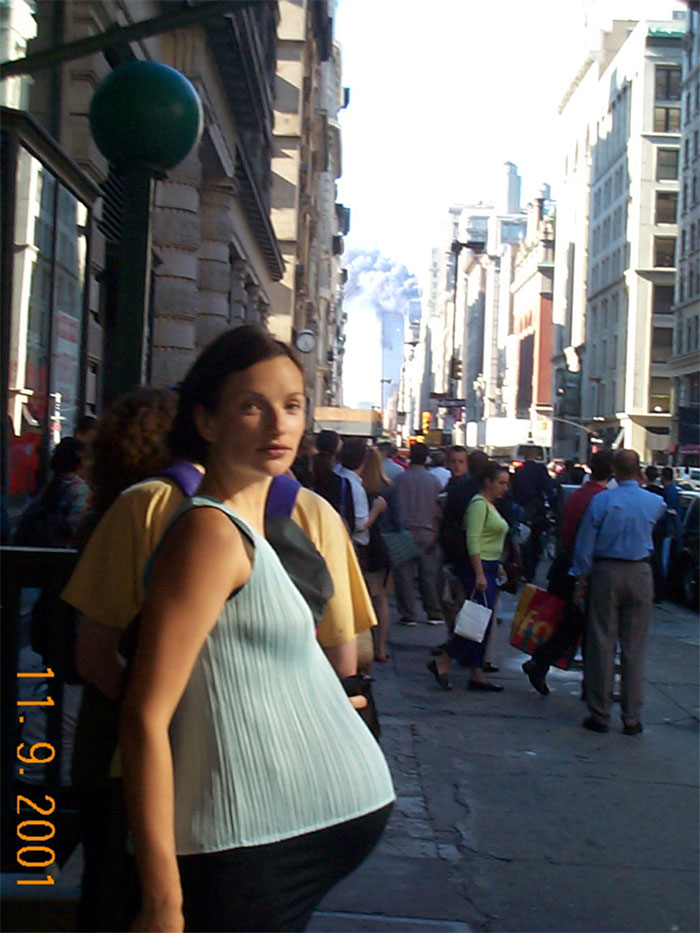
New York 911 September 2011 Not Yet Realizing A Terrorist Attack Was In Progress, Architect And Amateur Pilot Isabel Daser, Eight Months Pregnant, Asked A Co-Worker To Take Her Portrait As A Record Of The Day (Greta,J: 2015) .
The Rapid development of the Citizen Journalist development can be tracked. While the 911 was covered by photo journalists and activist like Bill Briggart ( Briggart:2017 ), who gave his life at the World trade center, Documentary photographers like Magnum photographer Steve Webb, Street photographer, Joel Meyerowitz, (Harris:2011) a world renowned War Photographer James Nachtwey (Nachtwey:2017) and amateur photographers such as a John Botte a NYC Detective and some tourists present on that day. Photos were with an unprecedented variety of camera’s such as Instamatics, 35 mm film SLR’s and rangefinder cameras , Medium format cameras and their is even a photograph taken with a view camera. Todd Maisel a Photo journalist used the first professional grade DSLR an , a Nikon D1 and a photograph taken using a Sony Mavica. All of them captured the mood of the day and the events in their different perspectives. What is notable is that the cellphone camera has not been introduced yet
The cellphone camera launch in Japan and 911 happend in the same month. the Cellphone camera was launched in Britian the folowing year and it was launched in America in November 2002 (Hill:2013).
According to The Gaurdian commenting on the London Bombings in July 2015 ” The mobile phone photographers, the text messages and the bloggers – a new advance guard of amateur reporters had the London bomb story in the can before the news crews got anywhere near the scene.” and ” Seasoned news executives talk of a “tipping point”, a democratisation of the news process, the true birth of the “citizen reporter”. The public assuming control of the newsgathering process to a hitherto unimagined degree ” (Gaurdian:2005) . The world now needed to assess the impact of this new tendency.
A study done post the Boston Marathon Bombings in 2013 discusses the lessons regarding information provided via the Cellphone users. While regarded negatively, the footage from cellphones was used to identify the perpetrators. This article however raises major issues regarding “Citizen Journalism”.
The american government is considering blocking this unstoppable natural progression. While clearly accepted by news gathering executives this new tendency threatens the careers of established professionals.
Even documenting peoples lives is done effectively by “Hipstagramers”. I have seen work done by some of these that compete well with those making a living of it. Don Mcullen states in one of his videos that he does not fear the social media a the difference would become apparent when a photograph is enlarged. The quality of smartphone cameras has already passed that of film and is no longer true. ….. Day in “the life of Grunts” proved that with sufficient skill the IPhone can be used for news gathering and even win journalistic prizes.
As a wedding photographer I feel constantly under pressure to produce better work and deliver photos as soon as possible as I may be embarrassed by “Aunt Joey” taking better photographs and provide it a half an hour later via social media. But even saying that, my greatest threat is from Professionals that used to work in advertising, fashion and journalism who are losing out to cheap stock footage and CGI that change their career to wedding photography to survive.
This change in demand and skill requirement is not limited to the Photography practitioner. I was trained as Electronic engineer and had to reinvent myself to become a IT professional. with the advent of cheap hosting services in the cloud it is no longer possible to solicit a high salary as an IT architect. It is said that all practitioners may only have a carrier of 10 Years after which they will need to rediscover and retrain themselves.
If photography is the new language, then it holds true that the ideal is that everyone learns it and use it to communicate. And as in the case of the written language there will always be those that excel in it and a demand for them to provide eclectic or other supporting services, such as master photographers that know their craft at its deepest level, post production specialists, colour experts, graphic designers, editors etc. In short mediocrity will not survive. Not unlike the other industries, if you want to be a professional you need to provide real value. There is also a need to train photographic ethics as the above discussion indicate.
In the Art community the artist needs to find a way that express contemporary issues or be so eclectic that someone consider their work collectible.
Its only the amateur that still have the freedom to pursue freely the whole gamut of opportunities available to us all and enjoy a photograph, even if a million similar images has been taken.
Reference: HEIFERMAN, Marvin. ca. 2012. Photography Changes Everything. Aperture.
BRIGGART, Bill ca. 2007. “21 Rare Photos Of 9/11 Attacks You Probably Haven’t Seen Before” Bill Biggart Photographer (1947-2001) [Online] Available at: http://www.billbiggart.com/911.html [accessed 20 June 2019].
How I love this post title. This a perfect paradox that describe the practice of photography.
Jessie Alexander’s approach to teaching us has peaked my interest. Bear with me and read further to understand the two statements
My impressions of the engagement with the Fishers cohort
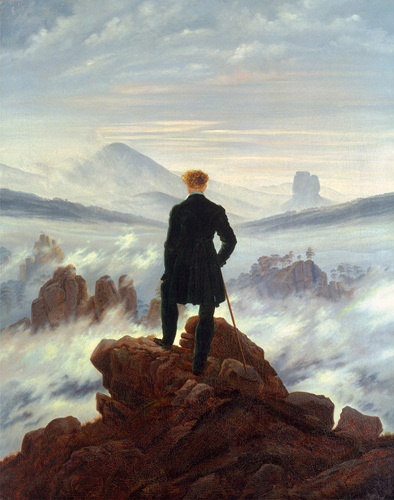
A wanderer above a Sea of Fog 1818-Casper Dawid Fiedrich
In spite attempts to separate the photographers context from the appreciation of the art work, the photograph in this case, this weeks exercise emphasized the value of understanding the photographers and what influence their photography. Our Photographs are not merely a disconnected moment that is captured. Even intuition is informed by our experiences and past learnings.
Philosophy and its influence
One of my latest and more intense influences in my photographic practice and development is the disciplines that has been developed in History and Theology and other philosophies. While I don’t see myself as fully knowledgeable in the subject, I believe this is a significant global influence that knowingly and unknowingly impacted us throughout the western world via our education. It is how we have been taught to learn, observe and put it into practice. You may well think that the “Enligtenment” is a photographic term but this period’s impact on the development of photography or arguably may even have been the road that led to discovery of it.
The Enlightenment was a golden period when conflicting philosophies such as Rationalism, Romanticism and Empiricism collided which resulted in a creative tension launching the world into the greatest period of incalculable growth and understanding of the world we live in. I have no doubt it is the source of of conflict that all serious photographers experience in our practice today. the terms used in Jessy’s lecture and some of the students responses such as discipline, critical thinking, aesthetics, characteristics and practice are terms developed from that period. But we forget that there was conflicting philosophies and that we are mere disciples of all of them.
Rationalism Rationalism, in Western philosophy, the view that regards reason as the chief source and test of knowledge. Holding that reality itself has an inherently logical structure, the rationalist asserts that a class of truths exists that the intellect can grasp directly. There are, according to the rationalists, certain rational principles—especially in logic and mathematics, and even in ethics and metaphysics—that are so fundamental that to deny them is to fall into contradiction. The rationalists’ confidence in reason and proof tends, therefore, to detract from their respect for other ways of knowing.
Encyclopedia Britannica
Today there is a clear rational approach being used to teach Art and in this case photography. The ontological approach and references made to Plato’s cave by Susan Sontag clearly indicate this influence. Jesse’s rational use of terms such as discipline, practice and characteristics is delivered to us in our educational discourses. It helps us to develop clear understanding to gather knowledge by categorizing, classify and enable us to rationalize and critically analyse our learning and understanding and intern entering into discourse with each other. In the late 18th century and early 19th century all form of higher learning was considered art as indicated in the title of this course: The Masters in the Art of photography.
As Jesse pointed out in his lecture it is merely the discourse between the established practitioners and intellectuals of the Arts such as literature, painting, drawing and sculpture.
This rational discourse, coupled with photography’s perceived ease to execute and accessibility to all, lead to an unwarranted resistance to change and the willingness to accept photography and the motion picture as true artistic en-devours. In my view it was also to disenfranchise those that wanted to express themselves through photography as they felt commercially threatened by it. However, early photography and film were infantile instantiations of what can arguably be considered the greatest influences on civilization since the development of language and writing.
Those that adopted the change reaped great benefits and applied what the learned from this practice to the older practices. The digital age put a similar challenge to the old film based photographers and the digital image and its capabilities. This is proven as photography and the motion picture has become one of the major communication mechanisms in the world, and is used to document science.
Naturalism
Naturalism, in philosophy, a theory that relates scientific method to philosophy by affirming that all beings and events in the universe (whatever their inherent character may be) are natural. Consequently, all knowledge of the universe falls within the pale of scientific investigation.
Encyclopedia Britanica
Empiricism, in philosophy, the view that all concepts originate in experience, that all concepts are about or applicable to things that can be experienced, or that all rationally acceptable beliefs or propositions are justifiable or knowable only through experience. This broad definition accords with the derivation of the term empiricism from the ancient Greek word empeiria, “experience.”
Being a true scientific en-devour the practice of photography is inherently tied with the harnessing natural laws. The taking of pictures is practice is empirical in nature. A practitioner needs need to understand how it is affected by lenses and apertures, and even the process of capturing the light (photons) via either a chemical or electrical reaction on the film or sensor to capture a two dimensional image or as Susan Sontag calls it a ” a Trace of reality”. And most of the practice is developed through experiential learning. A predictable cause and effect. No wonder we attempt to define the visual image and its composition in terms rules. How, what you do, effect the viewer! Rules that can make people interpret the image in a specific unambiguous way.
Romanticism, attitude or intellectual orientation that characterized many works of literature, painting, music, architecture, criticism, and historiography in Western civilization over a period from the late 18th to the mid-19th century. Romanticism can be seen as a rejection of the precepts of order, calm, harmony, balance, idealization, and rationality that typified Classicism in general and late 18th-century Neoclassicism in particular. It was also to some extent a reaction against the Enlightenment and against 18th-century rationalism and physical materialism in general. Romanticism emphasized the individual, the subjective, the irrational, the imaginative, the personal, the spontaneous, the emotional, the visionary, and the transcendental.
Encyclopedia Britanica
There ate many other philosophies that may be descussed but I limit it to Romanticism. The term aesthetics ties to this. This is where intuistion plays. This relate to our existential experience. In terms of photography an irrational, supernatural yet empirical process we as photographers experience. The true making of the photograph.
But in a sense this is the part of photography that bring in the unruliness. As a true romanticist it tends to be my final goto!
Call for the development of a Philosophy of Photography
All of the of us have been shaped by these influences. It is what we are all pursuing in this course even if we don’t realize it. Not merely taking or making photographs. When I started to give photography masterclasses this understanding allowed me to really improve my teaching of photography as an Art- within a strict discipline and a touch of unruliness. The later, in my view , the greatest gift to creativity.
The rest of the module merely expand and illustrate Jesse’s profound introduction.
In conclusion
I invite my co-travelers above the sea of images to meditate over our aspirations to become become better Photography practitioners. We need time to ponder truly what is meant by discipline, practice, characteristics and learning the rules. Words that are bandied around so easily at this stage. I believe we will then find the way to understand, categorize and intellectually elevate our practice. But our practice needs a big unruly dose of romanticism, skepticism or suspicion or whatever you feel you would want to express in the time we live in today.
What came to my mind during the introduction is that the term “Global image” has the potential to be misunderstood as a global oneness or global understanding of images or influence. But Jesse made it clear it is about the ubiquitous nature of photography. From the inception of photography it was given as a “Gift to the world” and it rapidly spread across the world reaching across racial, cultural and class divides.
In my view, Photography is a relatively young discipline in the arts when compared to Painting, sculpting and the literature. If the enlightenment influenced it or it influenced the enlightenment is debatable.
The Democratic and Ubiquitous Nature of photography
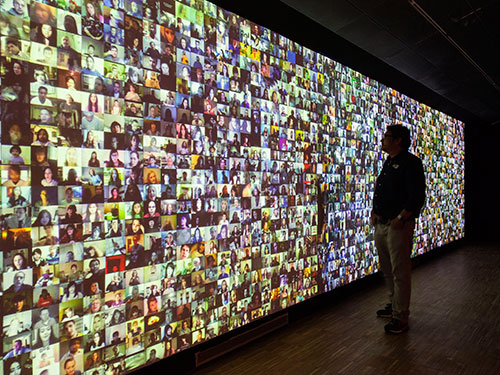
The ubiquitous spread of photography continues until today and has not abated. The digital era and growth in image content via social media and digital albums which MOMA refer to as ” a Sea of images” reflects this and the growth has become exponential.
As a young man in 1977 I had access to photography via the small format point and shoot cameras and getting into formal photography required a relatively small investment in a Single Lens Reflex film camera and few lenses primary lenses. You were then considered a photographer meant that I special place in society. An artisan. In South Africa we never had photographic guilds. These 35 mm SLRs, range finder, medium format and large format cameras were mainly manual mechanical devices that needed a practical knowledge and skill to operate. It meant that while everyone could own a camera a photographer was seen as a qualified practitioner. Anyone else was called “snap shooters or point and shooters” ( “mik en druk” in Afrikaans).
Automation and improved technologies such as auto focus and in camera light meters was being introduced making it possible to reduce the skill and knowledge and the practitioner required and term Photographer was effectively merged with that of the snap shooter. This and the advent of the digital age continued the closing of the gap and the ability to have this functionality coupled withe the ability to process the images and share it cheaply via your phone meant that you always have your camera with you caused the recording of images to globally grow to what it is today.
The moving image is fast approaching the same level and will soon become as easily available as the still picture with Virtual Reality following closely behind. Is this a bad thing? Not for those that use the technologies. But it impacts on the practitioners and their ability to have commercially viable careers.
The digital world and technology advances influences my practice in various ways.
It simplify my image creation process,
The quality of the imaging products are increasing daily
To remain competitive I need to be ahead of the technology curve to produce work with a higher quality.
I need to transcend the “normal” in terms of my practice
The expectation from a professional photographer is higher than ever and your work needs to be exceptional and eclectic
I need to work hard to elevate my practice to a point that it transcend the visual noise and let it float above the “Sea of images”
My practice requires of capturing awe inspiring images at a consistent level
My knowledge of the visual language needs to transcend that of the average camera user.
I need to make my images available on social media platforms and other digital platforms
I need find ways to present my photography in a way no longer experienced by the average user. In this case their is a resurgence of the print.
As Practitioner of the discipline I am required and need to be willing to educate the masses on the visual practice and appreciation for this form of expression.
I need must be willing to participate collaborate with practitioner communities and like minded individual that want to continue to elevate this practice.
And lastly realize that certain categories of photography will never be competitive and financially viable.
All of the above is the same as it was in the past. In short as a professional or art photographer you need to have something to say that is relevant, express it well and do it at an eclectic level.
My impressions of the submissions of the Fishers cohort
This week was also intended for us to get to know each other. In my opinion the passion and love for photography is high. The individual views shared in the assignment showed diversity and in certain cases a depth. We need to remember that even if photography is global it is our diversity that will strengthen all of us. Photography as a discipline and the passion for it is not dead and as it is relatively young. Who knows what will be realized by the 19 individuals starting down this path of discovery.
Jessie and Paul’s willingness to engage, share and support is already having an effect on me. I cant wait for the next portion. I guess we need to also learn to trust the process and participate fully to make it a success.
I am turning 60 on the 29th of June. For most of my lifetime I have followed a path. Sometimes it was a path less traveled but it was still a path. In my own way I am going off the path….
This morning I woke up with an idea. Up to now I said that I want to go into full-time photography… but this is wrong!!! I have always been in conflict with myself … a non- conformist. Let me explain…
The world wants to classify, divide, and decide on ones worth. Your worth is said to be based on the wealth you can provide others… Frankly make them money! Only the so called “wealthy” is capable to live their dream! This is bull….! It is merely the path many set out on. But millions never succeed. I too have failed in this…. It was never my purpose.
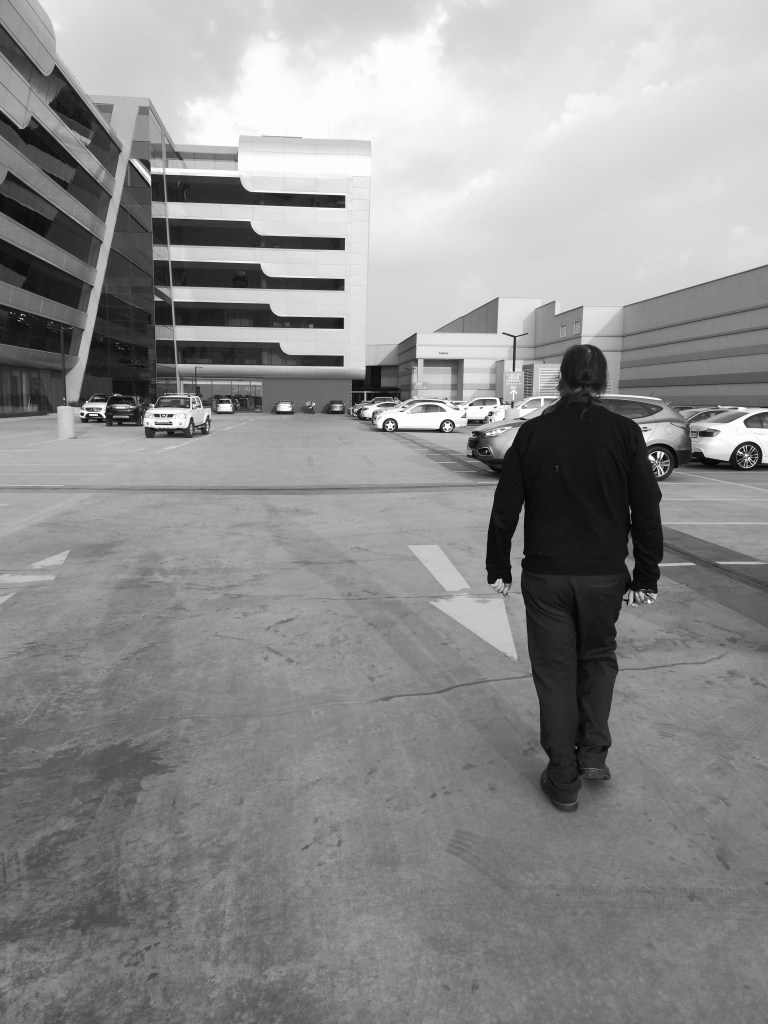
I am…. Photographed by Morne Nagel (my Son) and published with his permission.
So what is my purpose? Am I an artist? What does this mean to me? This is a complex question. For me art seeks to reflect on the world. Finding the deeper meaning in everything: work, people, the world we live in, religion, politics and family life! This has always been my quest. But I left it as a young man when I pursued the path that my dad wanted me to follow. It was a divergence. Although I found great pleasure on the path I had to entertain my real self on my way. I always felt the need express myself, to take photographs, paint, draw, write, teach, study …do more…. I know now that I have been missing my artistic expression. I have a desire to find a way for others to see that. In the last 10 years against the bitterness of being sidelined; due to my age and the color of my skin, my class, to be told that I am irrelevant, that I have nothing to say. BULL… Again my soul shouts :
“I am”… I said
To no one there
And no one heard at all
Not even the chair
“I am”… I cried “I am”… said I
And I am lost and I can’t
Even say why
Leavin’ me lonely still
Niel Diamond
It stops now. Following does not help me. Leading does not help me, even the path less traveled…. I must create my own path. I am unique. I am not white or black, man or woman, wealthy or poor, a South African…
I am!
There is an existential part of me that remains undefined, that is undefined… A spark that seek a way to shout out to the world. A spark that that gets defined by other people, philosophers, intellectuals. It’s an interpretation of me. Its not me… I am…drawing the line. I will find a way of freeing the essence of me. I will find the artistic expression that do this for me. And if anyway possible find a way assist to free the individuals around me or fail trying. This is it!
( A purge from my soul on the 3rd of June 2019 – when I thought that I would no longer be able to continue with my studies at Falmouth. 6 hours later my circumstances changed. I include this piece of honesty to hold me true. I believe my studies at Falmouth will enable me to find my path.)
A hollow portrait, or “portrait en creux,” as it is called in french, is a still life taken that presents a person. During an on-line short course at the University of Mitchigan we were challenged to do such a self portrait. The outcome was fascinating and I am sharing my response with you.
Please take your time and take specifically how your eye moves in the photograph. See if I succeeded in my composition and please leave a comment after reading my explanation below.
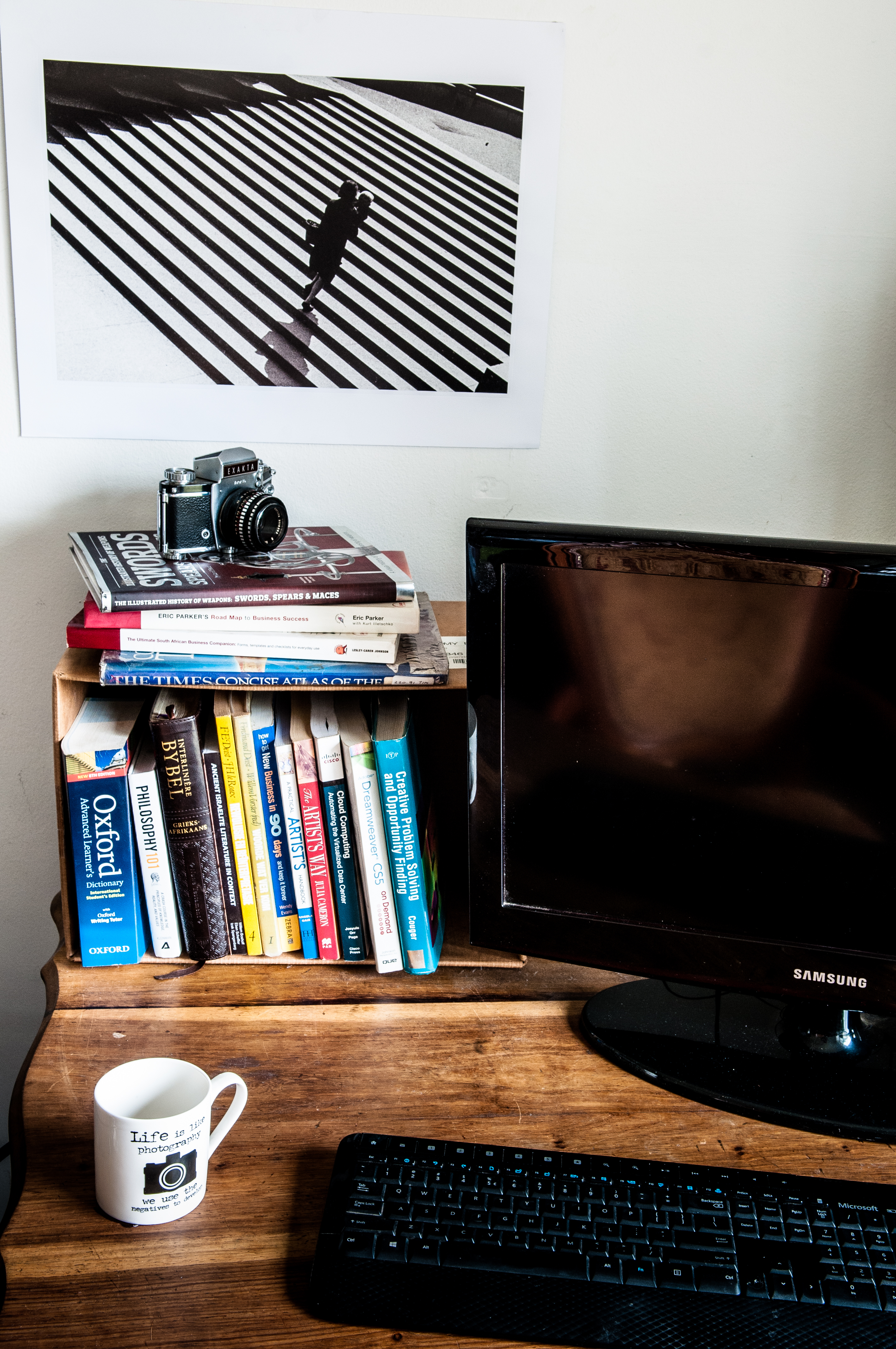
Autoportrait en creux de André
My passage through life is a circular path between knowing and not knowing. I am developed through introspection, studying and creative self-development, to grow within those things that I am passionate about.
I chose symmetry for my composition to equally balance the light and the dark sides in a Yin and Yang pattern, alluding to the interaction between that what may be known, the left side, and that which is self-discovery, the unclear darker side. There is a reflection of that if you look at long enough may be recognizable. Its the reflection of my study chair . I moved the chair deliberately to reflect in the screen.
I used side lighting to create depth and fortunately for me, the light came via the darker side, highlighting that the uncertainty informs and enlightens what is known.
The use of the photograph by Alexander Rodchenko in black and white, which includes a woman and child, symbolizes my wife and family. It’s inherent imbalance seems to lead ones eye to the black PC screen and keyboard. The eye is then drawn to the white cup which is juxtaposed with the black screen and keyboard. The literal meme on the Cup reads ” Life is like photography… we use the negatives to develop”. i know it is a bit literal, but prove that the composition is what I intended it to be. Your eye is drawn upward from the cup to the lines and colour of the books. These books represent my passions in their selected titles, central theme in my life, religion, history, business, work, Art and creative thinking methods. The colour was a deliberate choice. I had to see to it that the focus is the sharpest in this area as this is the main elements of the Photograph. Your eye may ponder here for a while, or continue to the photograph above, directed by the lines in the book.
The movement is In a clockwise direction; symbolizing time. The eye circles back to the black and white photograph with the family rising up on the stairs.,, and the cycle continues.
As a person trained the English world, it does not matter where you start. The path will be the same as it it is ensured by diagonal lines of the Rodchenko photograph which will direct the eye from left to right increasing the dynamic feel of the photograph… in spite of the symmetry . This movement of the eye is natural as this is how we look at things around us. it is called the sacadic movement of the eye.
It dawned on me after taking the photograph that my old wooden study table is my inheritance from my parents where I studied for school, thus presenting the foundation of those that came before me.
While concluding the “Seeing through photography” class presented by MOMA we had to select our favorite week during the course and say why using their material or my own. I decided to use a portion of David Goldblatts work in The Afrikaner. I thought it wise to share with you.
David Goldblatt’s background, as a descendant of Lithuanian Jews who had to flee their country due to racist hate and marginalization, made him a perfect observer of the South Africa of his time. He always saw all people as they are and never wanted to choose sides in the political, economic and class agendas. He said he wasn’t a “Joiner”. He died in June this year, keeping true to his dream for his beloved South Africa.
I needed to set the scene, as the following photographs are from David Goldblatt’s series which he published called “Some Afrikaners photographed”. One may skew his intention by applying a political context on what you will see. He did similar wonderful published works on other communities within South Africa.
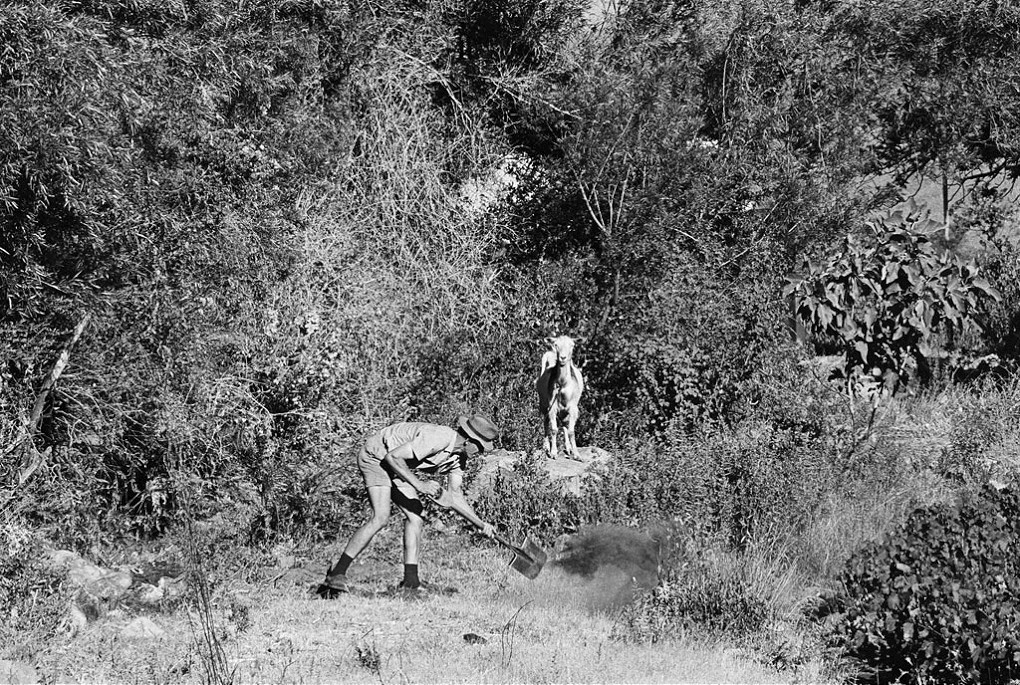
While passing through, we met one of the last original “Kloofers” and signed his guest book.
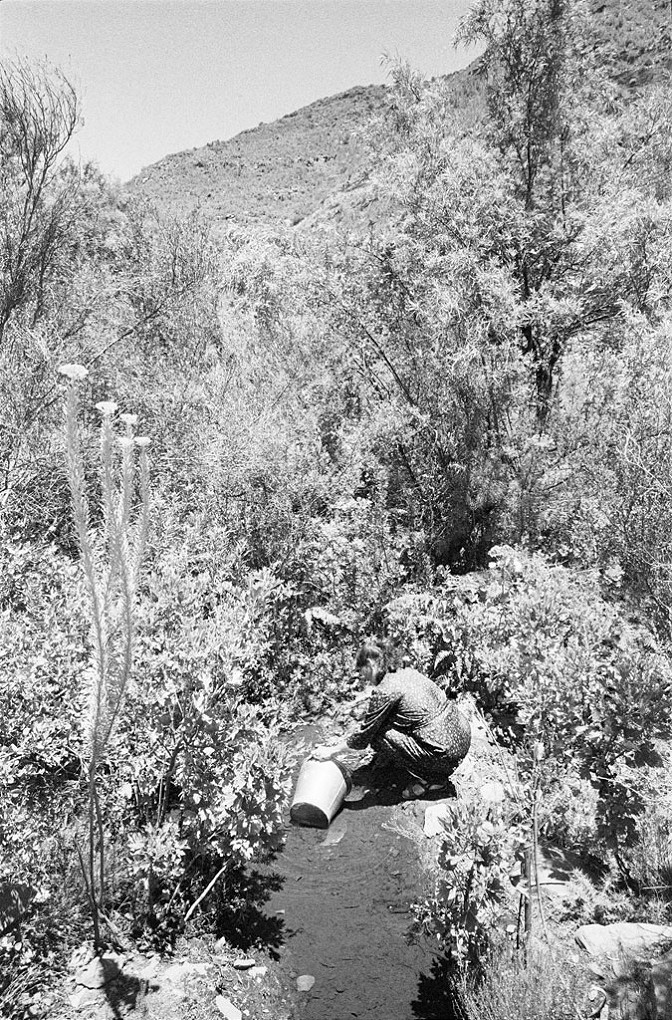
Half of the valley has no water and is split by a river that passes through the center of the valley. The eastern part of the valley has little water and is probably why outsiders called it “The Hell”. However, as you cross the river towards the west, the vegetation changes due to this freshwater stream running from west to east.
This part of the valley, Which I named “paradise”, is where most of the residents lived.. Walking through this botanical splendor has become the most beautiful and memorable experience I had in my life.
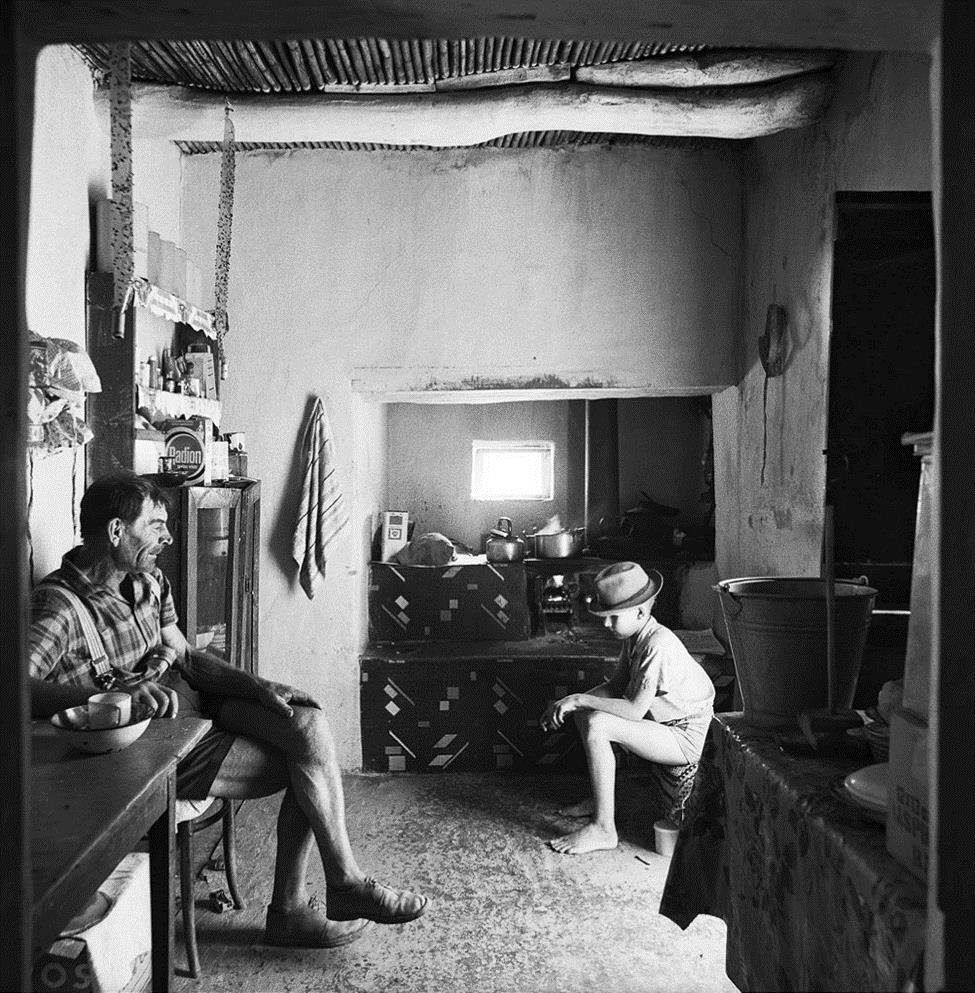
Note that the dress Katrina wears is not reminiscent of the 60s, More from the pre-first world war times. Most Afrikaner woman never wore pants in those years and they grew their hair long. These were simple people. They struggled on their own. No indoor plumbing. For me, David captured the essence of this.
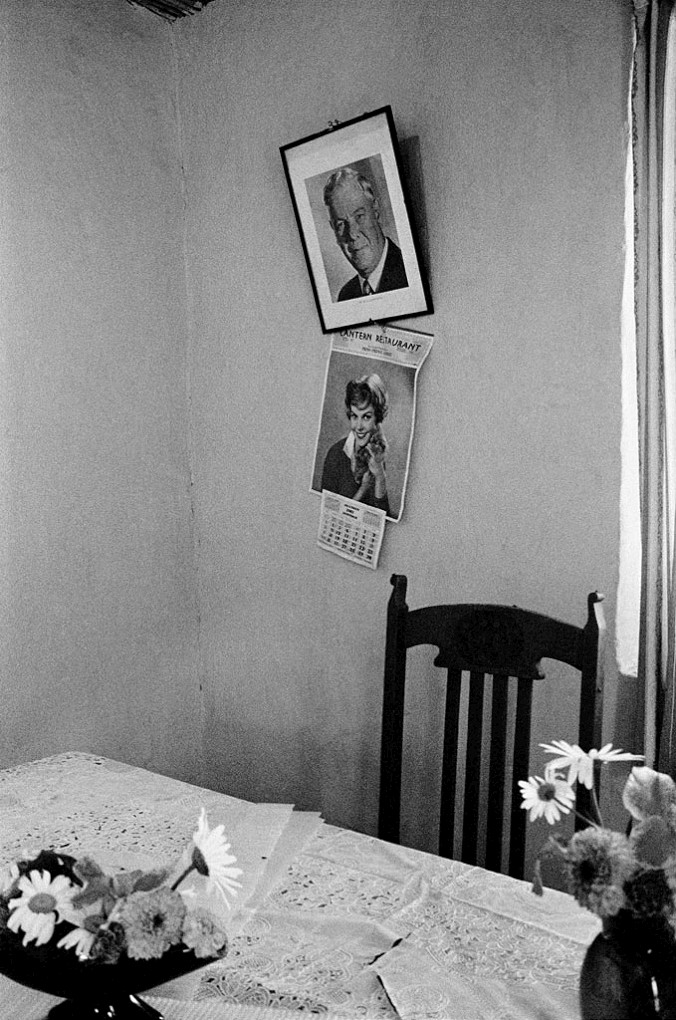
In Afrikaner culture the dining room and kitchen is the center of family and religious life. Although isolated from the outside world they have a Photograph of Dr. Hendrik Verwoerd on their wall, one of the founders of the Republic of South Africa. He was also the first Prime minister, who is today infamously known as the father of “Grand Apartheid: Dr. Verwoerd was well loved by most Afrikaners and, surprising to some, a large group of Africans. Dr. Hendrik Verwoerd was assassinated on the 6th September 1966 for non-political reasons, more than a year before this photograph was taken by David. A loss to the Afrikaner, much in the same way the Americans losing President Kennedy or even Abraham Lincoln.
The tidiness and flowers within this simplicity is endearing and take me back to my grandparents. The Calendar is of a restaurant has a picture of a the quintessential 60’s woman and contrast with the previous picture and may be indicative of the aspirations of the wife, Katrina.
I love the way David could get the people so at ease. He was an outsider. However, It may be indicative of the hospitality for which the Afrikaners was well known for at that time.
I grew up bare foot too. Shoes, if you had any, was only worn on special occasions.
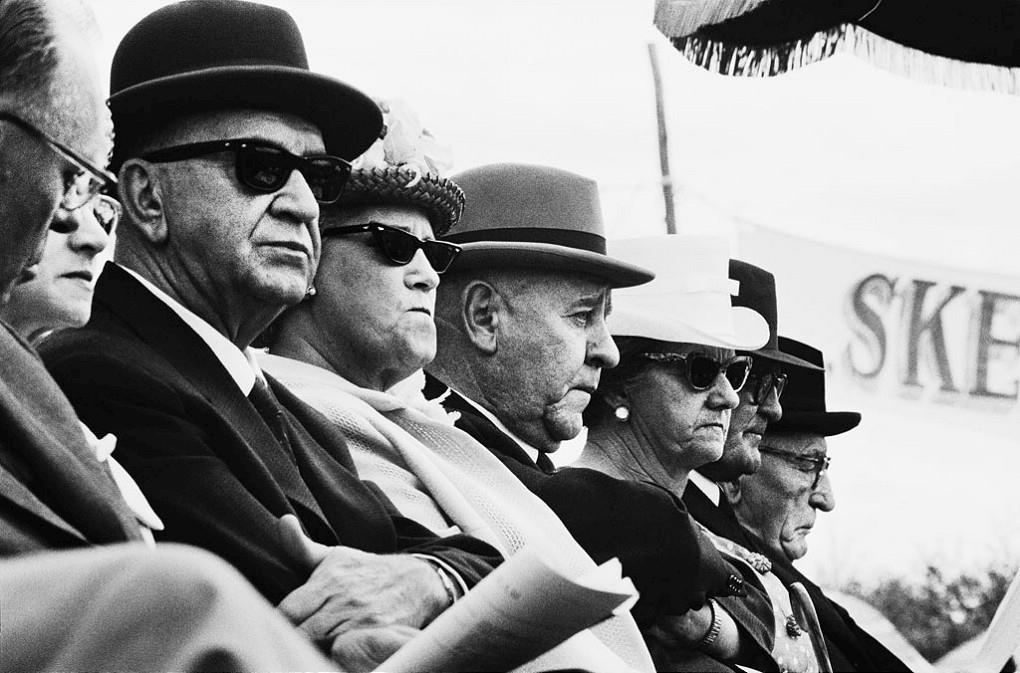
Even if David did not want to take sides in the political debate, the acceptance of his work was received differently by the various communities.
My essay clearly indicates how my context influenced my interpretation of the photographs.
Those promoting Afrikaner idealism, trying to escape their past, saw this as an attack on the dignity of the Afrikaner. Those Afrikaners, that came from rural backgrounds relate to these photographs. This essay does not take into consideration how English South Africans and Africans view these photographs. There is a universality here. We all have ancestors that share a similar struggle to tame a rugged land. Simple lives in simple houses. In this way, the issues of the photographer’s view, the ability of a photograph to tell the whole story, is tested in the same way as Robert Frank’s “The Americans”.
If the photographs are viewed out of context or from a different point of view, the above photos may be interpreted completely differently.
David had to publish his own books and add his own comments to ensure that the work had integrity, with limited influence of publishers. As a South African and Afrikaner, I appreciate his full body of work and wish that I can follow in his footsteps to photograph the unfolding future of the human side of all the Peoples of South Africa.

 André Nagel's Critical Research Journal
