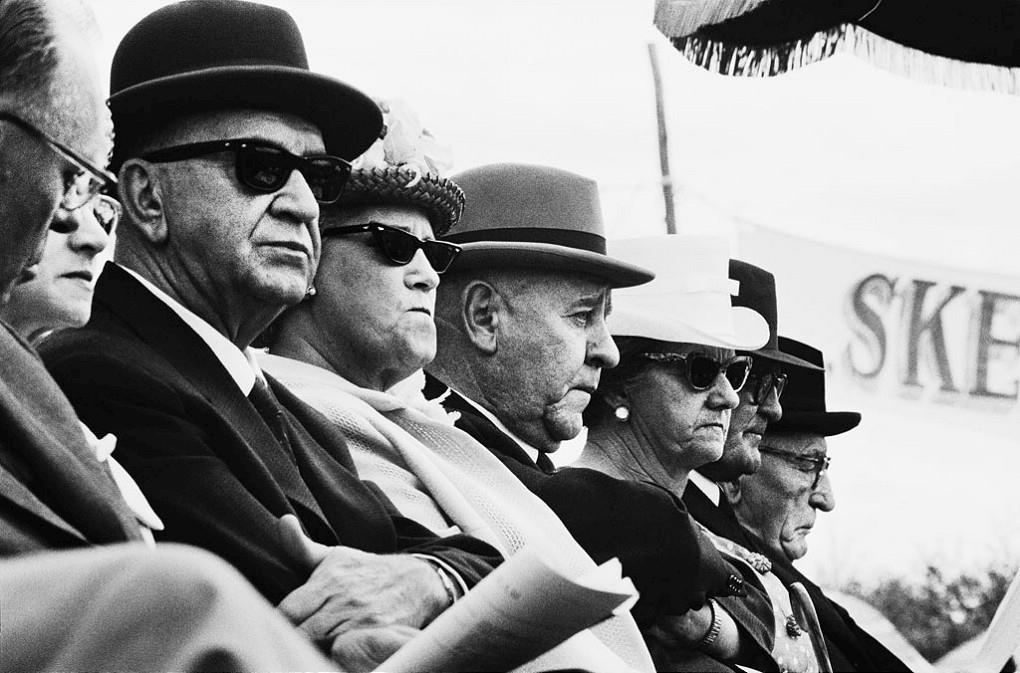
Unruly Discipline

Position and Practice – Week 2

How I love this post title. This a perfect paradox that describe the practice of photography.

Jessie Alexander’s approach to teaching us has peaked my interest. Bear with me and read further to understand the two statements

My impressions of the engagement with the Fishers cohort
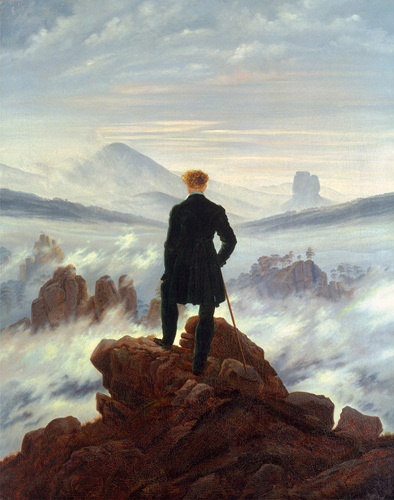
A wanderer above a Sea of Fog 1818-Casper Dawid Fiedrich

In spite attempts to separate the photographers context from the appreciation of the art work, the photograph in this case, this weeks exercise emphasized the value of understanding the photographers and what influence their photography. Our Photographs are not merely a disconnected moment that is captured. Even intuition is informed by our experiences and past learnings.

Philosophy and its influence

One of my latest and more intense influences in my photographic practice and development is the disciplines that has been developed in History and Theology and other philosophies. While I don’t see myself as fully knowledgeable in the subject, I believe this is a significant global influence that knowingly and unknowingly impacted us throughout the western world via our education. It is how we have been taught to learn, observe and put it into practice. You may well think that the “Enligtenment” is a photographic term but this period’s impact on the development of photography or arguably may even have been the road that led to discovery of it.

The Enlightenment was a golden period when conflicting philosophies such as Rationalism, Romanticism and Empiricism collided which resulted in a creative tension launching the world into the greatest period of incalculable growth and understanding of the world we live in. I have no doubt it is the source of of conflict that all serious photographers experience in our practice today. the terms used in Jessy’s lecture and some of the students responses such as discipline, critical thinking, aesthetics, characteristics and practice are terms developed from that period. But we forget that there was conflicting philosophies and that we are mere disciples of all of them.

Rationalism Rationalism, in Western philosophy, the view that regards reason as the chief source and test of knowledge. Holding that reality itself has an inherently logical structure, the rationalist asserts that a class of truths exists that the intellect can grasp directly. There are, according to the rationalists, certain rational principles—especially in logic and mathematics, and even in ethics and metaphysics—that are so fundamental that to deny them is to fall into contradiction. The rationalists’ confidence in reason and proof tends, therefore, to detract from their respect for other ways of knowing.

Encyclopedia Britannica

Today there is a clear rational approach being used to teach Art and in this case photography. The ontological approach and references made to Plato’s cave by Susan Sontag clearly indicate this influence. Jesse’s rational use of terms such as discipline, practice and characteristics is delivered to us in our educational discourses. It helps us to develop clear understanding to gather knowledge by categorizing, classify and enable us to rationalize and critically analyse our learning and understanding and intern entering into discourse with each other. In the late 18th century and early 19th century all form of higher learning was considered art as indicated in the title of this course: The Masters in the Art of photography.

As Jesse pointed out in his lecture it is merely the discourse between the established practitioners and intellectuals of the Arts such as literature, painting, drawing and sculpture.

This rational discourse, coupled with photography’s perceived ease to execute and accessibility to all, lead to an unwarranted resistance to change and the willingness to accept photography and the motion picture as true artistic en-devours. In my view it was also to disenfranchise those that wanted to express themselves through photography as they felt commercially threatened by it. However, early photography and film were infantile instantiations of what can arguably be considered the greatest influences on civilization since the development of language and writing.

Those that adopted the change reaped great benefits and applied what the learned from this practice to the older practices. The digital age put a similar challenge to the old film based photographers and the digital image and its capabilities. This is proven as photography and the motion picture has become one of the major communication mechanisms in the world, and is used to document science.

Naturalism

Naturalism, in philosophy, a theory that relates scientific method to philosophy by affirming that all beings and events in the universe (whatever their inherent character may be) are natural. Consequently, all knowledge of the universe falls within the pale of scientific investigation.

Encyclopedia Britanica

Empiricism, in philosophy, the view that all concepts originate in experience, that all concepts are about or applicable to things that can be experienced, or that all rationally acceptable beliefs or propositions are justifiable or knowable only through experience. This broad definition accords with the derivation of the term empiricism from the ancient Greek word empeiria, “experience.”

https://www.britannica.com/topic/empiricism

Being a true scientific en-devour the practice of photography is inherently tied with the harnessing natural laws. The taking of pictures is practice is empirical in nature. A practitioner needs need to understand how it is affected by lenses and apertures, and even the process of capturing the light (photons) via either a chemical or electrical reaction on the film or sensor to capture a two dimensional image or as Susan Sontag calls it a ” a Trace of reality”. And most of the practice is developed through experiential learning. A predictable cause and effect. No wonder we attempt to define the visual image and its composition in terms rules. How, what you do, effect the viewer! Rules that can make people interpret the image in a specific unambiguous way.

Romanticism, attitude or intellectual orientation that characterized many works of literature, painting, music, architecturecriticism, and historiography in Western civilization over a period from the late 18th to the mid-19th century. Romanticism can be seen as a rejection of the precepts of order, calm, harmony, balance, idealization, and rationality that typified Classicism in general and late 18th-century Neoclassicism in particular. It was also to some extent a reaction against the Enlightenment and against 18th-century rationalism and physical materialism in general. Romanticism emphasized the individual, the subjective, the irrational, the imaginative, the personal, the spontaneous, the emotional, the visionary, and the transcendental.

Encyclopedia Britanica

There ate many other philosophies that may be descussed but I limit it to Romanticism. The term aesthetics ties to this. This is where intuistion plays. This relate to our existential experience. In terms of photography an irrational, supernatural yet empirical process we as photographers experience. The true making of the photograph.

But in a sense this is the part of photography that bring in the unruliness. As a true romanticist it tends to be my final goto!

Call for the development of a Philosophy of Photography

All of the of us have been shaped by these influences. It is what we are all pursuing in this course even if we don’t realize it. Not merely taking or making photographs. When I started to give photography masterclasses this understanding allowed me to really improve my teaching of photography as an Art- within a strict discipline and a touch of unruliness. The later, in my view , the greatest gift to creativity.

I am currently reading “Towards a Philosophy of Photography” written by Media Philosopher Flusser, Vilém, 1920–1991 ( which was published posthumously in 2015 in English. As I am in search of uncovering the inherent wisdom of photography to learn and educate others in it, I will be referencing his material on a regular basis.

The rest of the module merely expand and illustrate Jesse’s profound introduction.

In conclusion

I invite my co-travelers above the sea of images to meditate over our aspirations to become become better Photography practitioners. We need time to ponder truly what is meant by discipline, practice, characteristics and learning the rules. Words that are bandied around so easily at this stage. I believe we will then find the way to understand, categorize and intellectually elevate our practice. But our practice needs a big unruly dose of romanticism, skepticism or suspicion or whatever you feel you would want to express in the time we live in today.

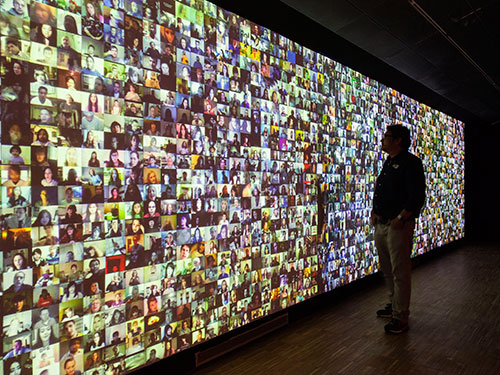
The Global Image

701 Position and Practice – Week 1

This image has an empty alt attribute; its file name is 5-24-HRS-IN-PHOTOS-Erik-Kessels-I-am-Data.jpg

Big Bang Data exhibition at ArtScience Museum Erik Kessels
https://d22ir9aoo7cbf6.cloudfront.net/wp-content/uploads/sites/2/2016/08/Big-Bang-Data-24-HRS-IN-PHOTOS-Erik-Kessels-I-am-Data1.jpg

What came to my mind during the introduction is that the term “Global image” has the potential to be misunderstood as a global oneness or global understanding of images or influence. But Jesse made it clear it is about the ubiquitous nature of photography. From the inception of photography it was given as a “Gift to the world” and it rapidly spread across the world reaching across racial, cultural and class divides.

In my view, Photography is a relatively young discipline in the arts when compared to Painting, sculpting and the literature. If the enlightenment influenced it or it influenced the enlightenment is debatable.

The Democratic and Ubiquitous Nature of photography

The ubiquitous spread of photography continues until today and has not abated. The digital era and growth in image content via social media and digital albums which MOMA refer to as ” a Sea of images” reflects this and the growth has become exponential.

As a young man in 1977 I had access to photography via the small format point and shoot cameras and getting into formal photography required a relatively small investment in a Single Lens Reflex film camera and few lenses primary lenses. You were then considered a photographer meant that I special place in society. An artisan. In South Africa we never had photographic guilds. These 35 mm SLRs, range finder, medium format and large format cameras were mainly manual mechanical devices that needed a practical knowledge and skill to operate. It meant that while everyone could own a camera a photographer was seen as a qualified practitioner. Anyone else was called “snap shooters or point and shooters” ( “mik en druk” in Afrikaans).

Automation and improved technologies such as auto focus and in camera light meters was being introduced making it possible to reduce the skill and knowledge and the practitioner required and term Photographer was effectively merged with that of the snap shooter. This and the advent of the digital age continued the closing of the gap and the ability to have this functionality coupled withe the ability to process the images and share it cheaply via your phone meant that you always have your camera with you caused the recording of images to globally grow to what it is today.

The moving image is fast approaching the same level and will soon become as easily available as the still picture with Virtual Reality following closely behind. Is this a bad thing? Not for those that use the technologies. But it impacts on the practitioners and their ability to have commercially viable careers.

How does it impact my photographic practice?

Christopher Baker, Hello World!Or: How I Learned to Stop Listening and Enjoy the Noise. Image Credit : ©GUNNAR KNECHTEL

The digital world and technology advances influences my practice in various ways.

  • It simplify my image creation process,
  • The quality of the imaging products are increasing daily
  • To remain competitive I need to be ahead of the technology curve to produce work with a higher quality.
  • I need to transcend the “normal” in terms of my practice
  • The expectation from a professional photographer is higher than ever and your work needs to be exceptional and eclectic
  • I need to work hard to elevate my practice to a point that it transcend the visual noise and let it float above the “Sea of images”
  • My practice requires of capturing awe inspiring images at a consistent level
  • My knowledge of the visual language needs to transcend that of the average camera user.
  • I need to make my images available on social media platforms and other digital platforms
  • I need find ways to present my photography in a way no longer experienced by the average user. In this case their is a resurgence of the print.
  • As Practitioner of the discipline I am required and need to be willing to educate the masses on the visual practice and appreciation for this form of expression.
  • I need must be willing to participate collaborate with practitioner communities and like minded individual that want to continue to elevate this practice.
  • And lastly realize that certain categories of photography will never be competitive and financially viable.

All of the above is the same as it was in the past. In short as a professional or art photographer you need to have something to say that is relevant, express it well and do it at an eclectic level.

My impressions of the submissions of the Fishers cohort

This week was also intended for us to get to know each other. In my opinion the passion and love for photography is high. The individual views shared in the assignment showed diversity and in certain cases a depth. We need to remember that even if photography is global it is our diversity that will strengthen all of us. Photography as a discipline and the passion for it is not dead and as it is relatively young. Who knows what will be realized by the 19 individuals starting down this path of discovery.

Jessie and Paul’s willingness to engage, share and support is already having an effect on me. I cant wait for the next portion. I guess we need to also learn to trust the process and participate fully to make it a success.

David Goldblatt – Documentary Photography in a South African Context.

While concluding the “Seeing through photography” class presented by MOMA we had to select our favorite week during the course and say why using their material or my own. I decided to use a portion of David Goldblatts work in The Afrikaner. I thought it wise to share with you.

David Goldblatt’s background, as a descendant of Lithuanian Jews who had to flee their country due to racist hate and marginalization, made him a perfect observer of the South Africa of his time. He always saw all people as they are and never wanted to choose sides in the political, economic and class agendas. He said he wasn’t a “Joiner”. He died in June this year, keeping true to his dream for his beloved South Africa.

I needed to set the scene, as the following photographs are from David Goldblatt’s series which he published called “Some Afrikaners photographed”. One may skew his intention by applying a political context on what you will see. He did similar wonderful published works on other communities within South Africa.

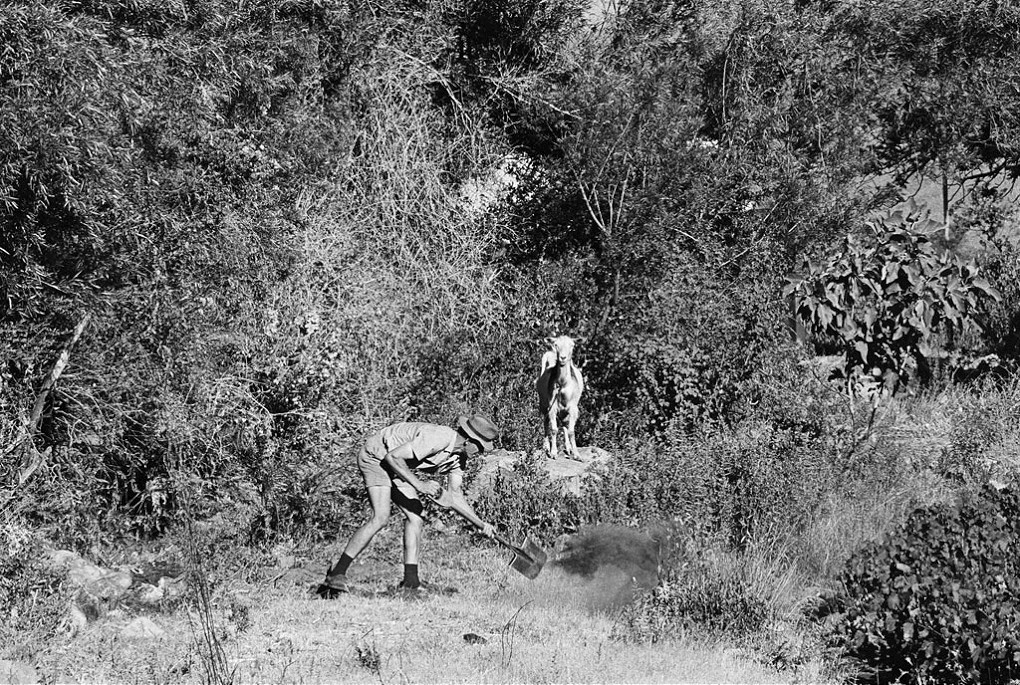
I have selected the photographs in that series that have a special meaning to me. In October 1978, while doing my officer training, we hiked into a secluded valley known to the inhabitants as Gamkaskloof. https://www.geni.com/projects/Families-of-Gamkaskloof-aka-Die-Hel/23899 and http://www.diehel.com/history.

While passing through, we met one of the last original “Kloofers” and signed his guest book.

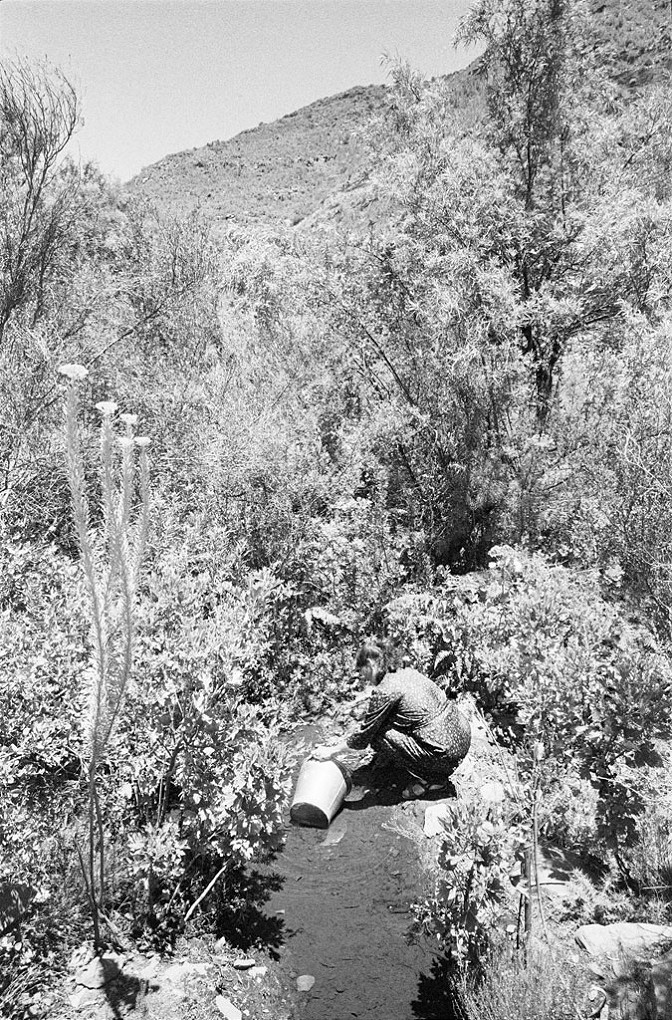
Half of the valley has no water and is split by a river that passes through the center of the valley. The eastern part of the valley has little water and is probably why outsiders called it “The Hell”. However, as you cross the river towards the west, the vegetation changes due to this freshwater stream running from west to east.

This part of the valley, Which I named “paradise”, is where most of the residents lived.. Walking through this botanical splendor has become the most beautiful and memorable experience I had in my life.

Note that the dress Katrina wears is not reminiscent of the 60s, More from the pre-first world war times. Most Afrikaner woman never wore pants in those years and they grew their hair long. These were simple people. They struggled on their own. No indoor plumbing. For me, David captured the essence of this.

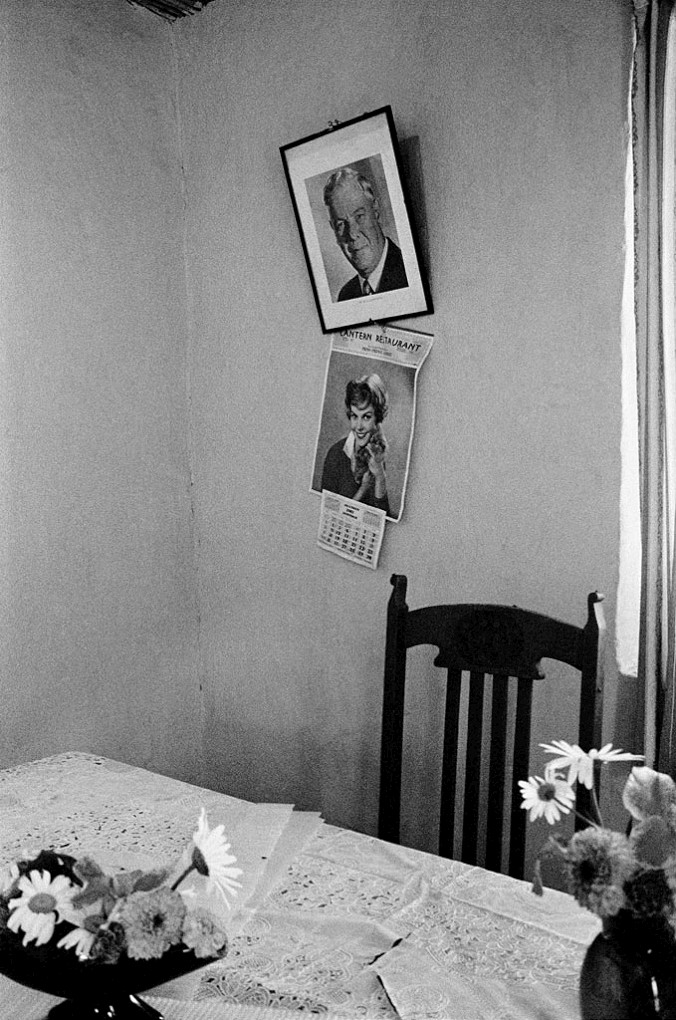
In Afrikaner culture the dining room and kitchen is the center of family and religious life. Although isolated from the outside world they have a Photograph of Dr. Hendrik Verwoerd on their wall, one of the founders of the Republic of South Africa. He was also the first Prime minister, who is today infamously known as the father of “Grand Apartheid: Dr. Verwoerd was well loved by most Afrikaners and, surprising to some, a large group of Africans. Dr. Hendrik Verwoerd was assassinated on the 6th September 1966 for non-political reasons, more than a year before this photograph was taken by David. A loss to the Afrikaner, much in the same way the Americans losing President Kennedy or even Abraham Lincoln.

The tidiness and flowers within this simplicity is endearing and take me back to my grandparents. The Calendar is of a restaurant has a picture of a the quintessential 60’s woman and contrast with the previous picture and may be indicative of the aspirations of the wife, Katrina.

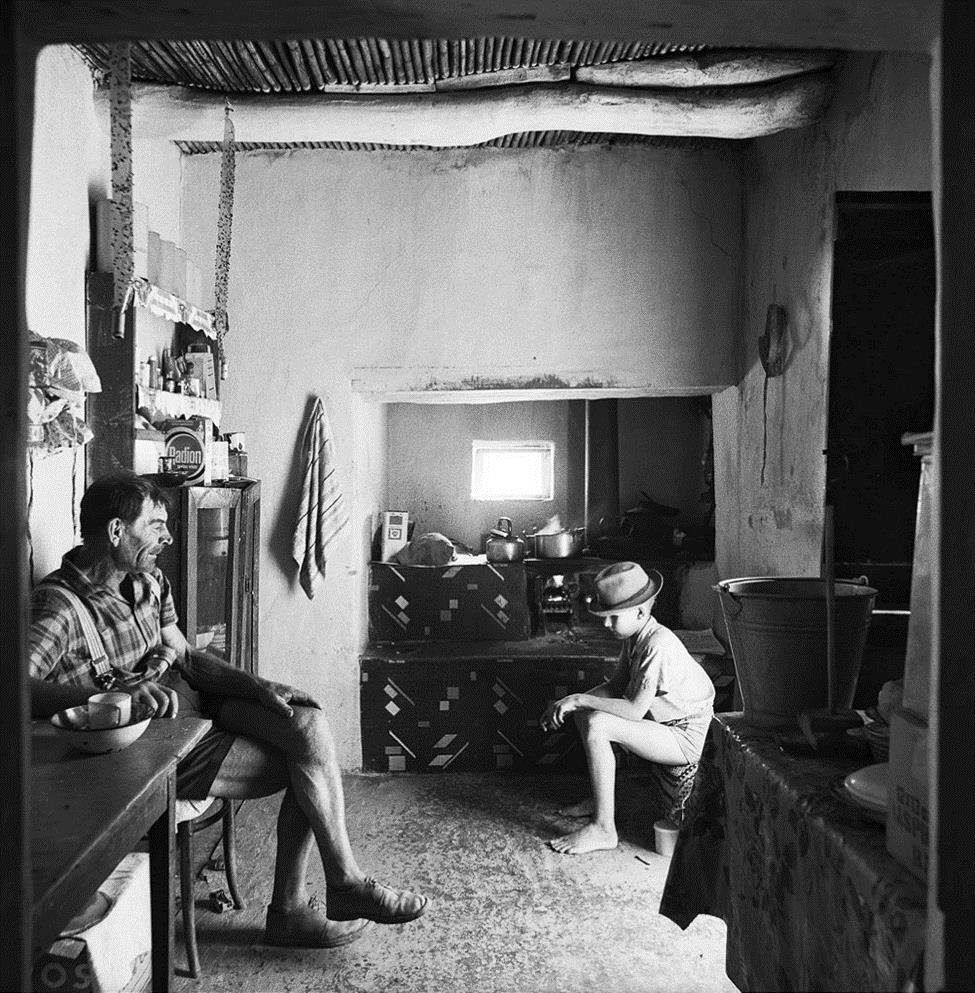
I love the way David could get the people so at ease. He was an outsider. However, It may be indicative of the hospitality for which the Afrikaners was well known for at that time.

I grew up bare foot too. Shoes, if you had any, was only worn on special occasions.

Even if David did not want to take sides in the political debate, the acceptance of his work was received differently by the various communities.

My essay clearly indicates how my context influenced my interpretation of the photographs.

Those promoting Afrikaner idealism, trying to escape their past, saw this as an attack on the dignity of the Afrikaner. Those Afrikaners, that came from rural backgrounds relate to these photographs. This essay does not take into consideration how English South Africans and Africans view these photographs. There is a universality here. We all have ancestors that share a similar struggle to tame a rugged land. Simple lives in simple houses. In this way, the issues of the photographer’s view, the ability of a photograph to tell the whole story, is tested in the same way as Robert Frank’s “The Americans”.

If the photographs are viewed out of context or from a different point of view, the above photos may be interpreted completely differently.

David had to publish his own books and add his own comments to ensure that the work had integrity, with limited influence of publishers. As a South African and Afrikaner, I appreciate his full body of work and wish that I can follow in his footsteps to photograph the unfolding future of the human side of all the Peoples of South Africa.

References

David Goldblatt’s Biography is available at https://www.sahistory.org.za/people/David-Goldblatt All photographs used in this discussion was taken by David Goldblatt and have been obtained from http://www.goodman-gallery.com/artists/davidgoldblatt for educational purposes and may not be re-used without the written permission of the gallery.